Classic card games compared
SKYJO vs UNO: Strategy, Luck, and the Right Game for Your Group
SKYJO and UNO both belong on a relaxed game-night shortlist, but they reward different kinds of attention. SKYJO turns a personal grid into a low-score puzzle; UNO turns a private hand into a race through changing colors and interruptions. Choose SKYJO for visible position-building and UNO for a more reactive shared contest. The better fit depends on your group, not a universal winner. This comparison follows the classic boxed games, uses concrete turn examples and explains where two-player rules and family preferences can change the answer.
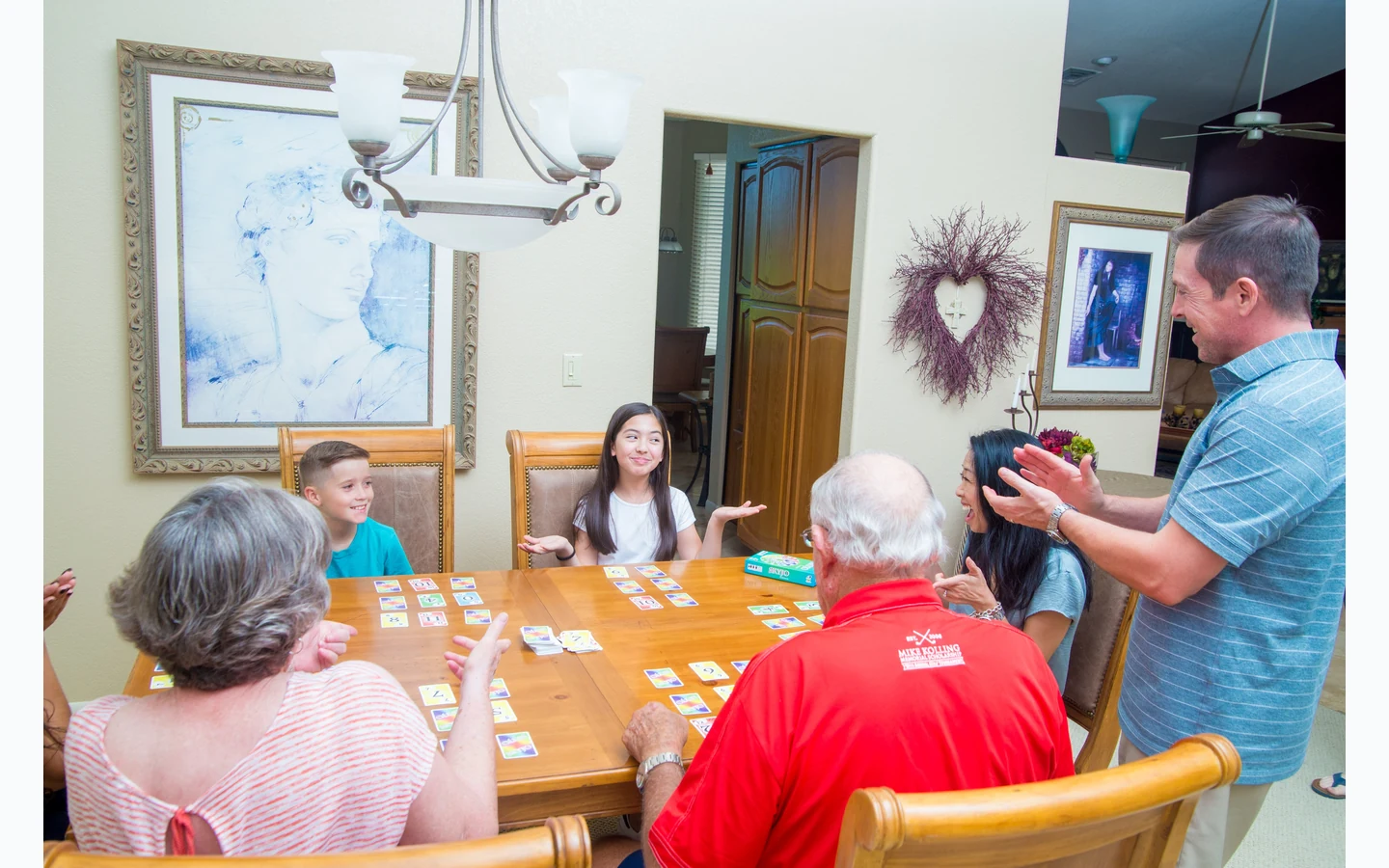
Choose the kind of contest you want
SKYJO and UNO can occupy the same spot in a family game collection without doing the same job. Classic SKYJO asks you to improve a grid of cards in front of you. UNO asks you to get cards out of your hand before the other players do. Both give you a draw pile, uncertain future cards, and simple turns, but they make those ingredients feel different.
Choose SKYJO when your group likes watching a position gradually improve. A high number can become a low one, and a promising column can disappear from your score. Choose UNO when people enjoy a changing shared situation: a different color, a skipped turn, or a draw card can interrupt the plan you were about to execute. These are differences in emphasis, rather than a claim that one game contains decisions and the other contains none.
| Question | Classic SKYJO | Classic UNO |
|---|---|---|
| What are you improving? | The score and arrangement of your personal grid | The size and usefulness of your remaining hand |
| What can opponents see? | Your revealed grid cards | Your hand size, but normally not its contents |
| What is the central choice? | Replace, reveal, or pursue a matching column | Choose a legal play, color, or draw decision |
| What ends a round? | A player exposes their remaining face-down cards through play, followed by the other players' final turns | A player gets rid of their final card |
| How does the full game work? | Lowest accumulated score when the finish threshold is reached | The classic points game rewards the first player to reach 500 |
That final distinction prevents a misleading comparison. Being first out in UNO wins a round; playing the full points game adds a longer scoring contest. Finishing a SKYJO round is also only one part of the result, and it can carry a penalty. If your group normally calls the winner after one UNO hand, say so when choosing between them: you are comparing your preferred session format as well as the printed games.
This guide compares the original SKYJO game with the classic UNO loop. It does not borrow star cards from SKYJO Action or draw-stacking effects from UNO No Mercy. For the full grid setup before you decide, the SKYJO rules guide is the useful starting point.
How the rules change the decisions
A useful comparison follows the moment when you have a choice. Neither game becomes interesting merely because the cards have numbers. The difference is what those numbers let you do, what you know before choosing, and what happens to the card you give away.
SKYJO: improve a grid without ending too soon
Classic SKYJO begins with twelve cards in each player's grid and two revealed starting cards. On a normal turn, you can take the visible discard and exchange it with a grid card, or draw an unknown card and decide whether to keep it. Rejecting the blind draw also means revealing one of your own face-down cards. This makes a discarded draw an information decision, not an entirely empty turn.
The column rule changes the value of a number. Three equal, revealed cards in a vertical column are removed. Imagine two visible eights with a third card still hidden below them. Replacing one eight with a two saves six points immediately, but gives up that particular matching opportunity. Waiting for an eight can clear the whole column; it can also leave you carrying expensive cards when somebody else ends the round. The sensible choice depends on the rest of your grid and how much time seems to remain.
Finishing also has a cost. In the Classic publisher booklet, a finisher who does not have the strictly lowest round score doubles a positive score. For an explanatory example, finishing on twelve while an opponent has nine turns that twelve into twenty-four. Revealing the last card is therefore not automatically a winning move. For a fuller explanation of ties, see the SKYJO tiebreaker guide.
UNO: manage a hand while controlling the next play
UNO starts from a seven-card hand. The central problem is finding a legal route through it by matching the discard's color, number, or symbol, or using an appropriate Wild. With a red seven on top, your choice between a red card and another seven can change which colors remain useful in your hand. You are shaping the next shared requirement while reducing what you hold.
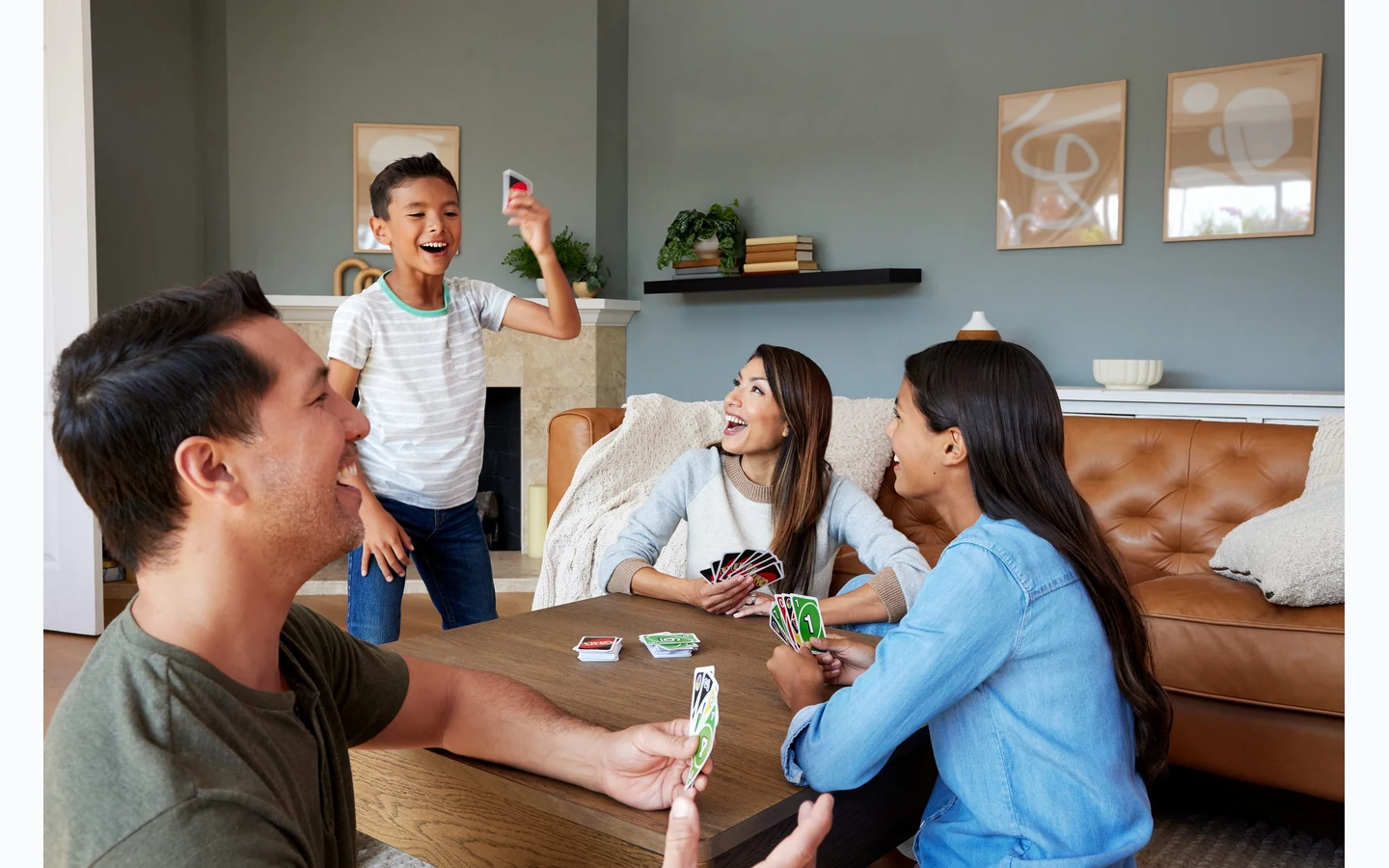
Powerful cards do not remove the need to check legality. The classic Wild Draw Four restriction concerns whether you hold a card matching the current color. It is not simply a bonus attack you may always use because the next player is close to finishing. Likewise, the classic draw procedure is not “keep drawing until you find something.” Those differences matter because an improvised draw rule can radically change how difficult it feels to escape a bad hand.
UNO rewards attention to sequence: which color to leave, when to spend a flexible card, and which opponent will act next. SKYJO rewards attention to position: which score liability to remove, what an unseen card may conceal, and whether the round is safe to close. Both questions can be enjoyable. They are simply different questions.
Luck, skill, and what you can actually control
Both games can produce a frustrating draw, and neither lets you select the future order of the deck. That does not make every legal choice equally good. The useful question is whether you enjoy the choices the game gives you before luck resolves them. Declaring one game “pure luck” and the other “pure strategy” hides more than it explains.
In SKYJO, much of the useful information is visible on the table. You can see your expensive exposed cards, a possible matching column, the top discard, and how close opponents appear to finishing. You cannot reliably read the values of cards that nobody has seen. Good play uses the information available without pretending that an attractive column will certainly receive its missing number.
UNO places more of the relevant information in hands. You know your own color distribution and can observe which colors opponents change, the moments they draw, and their remaining hand sizes. Those clues are useful, but a draw is not conclusive proof that a player holds no card of that color: the classic rules also permit a player to decline a playable card. Planning is an informed choice under uncertainty, not access to somebody else's hand.
A good decision can still lose the round
Consider a SKYJO position containing a revealed twelve and an available three. Replacing that known twelve produces a nine-point saving at that position. That calculation is certain; whether it is your best overall move is a different question. The outgoing twelve becomes available on the discard pile. If the next player needs exactly that value to finish a column, your useful exchange may also help them. If the twelve belongs to your own promising pair, replacement also changes that plan.
Now imagine an UNO hand with several blue cards and one red seven, facing a blue seven. Playing the red seven sheds your lone red card but changes the color away from your stronger blue holding. Playing a different blue card preserves that color while leaving the red seven for later. Neither option is automatically correct: opponent hand sizes, the other blue cards, and your ability to change color again all matter. This is hand management rather than grid optimization.
These examples explain why results are a poor shortcut for judging the games. You can make a reasonable exchange and lose to an opponent's excellent next draw. You can also win after a careless play because the following cards rescue you. A more useful habit is to describe what a move improved and what risk it accepted. The SKYJO luck-versus-skill analysis explores that distinction further without turning one experimental result into a universal promise.
Which game works better with two players?
Both can be played with two people, but the smaller table sharpens different features. SKYJO becomes a direct exchange of opportunities. The person who can benefit from your outgoing discard is also the only person whose score you must beat. A number you are delighted to remove can be the missing card that lets your opponent erase a column. Before exchanging, look across the table as well as at your own grid.
This does not mean refusing every useful discard to your opponent. Suppose keeping a high card would leave you with a clear liability while their apparent match is still uncertain. Protecting yourself may remain the better choice. The two-player difference is that the consequence is easier to identify: you are evaluating one visible rival position, not trying to anticipate several intervening turns and a changed discard pile.
UNO has a particularly important two-player rule. In Mattel's classic two-player instructions, Reverse works like Skip, so the player can immediately play again. A Skip also returns the next play to you, and a legal Draw Two or Wild Draw Four makes the opponent draw before play returns. Reverse is therefore not a meaningless card simply because clockwise and counterclockwise lead to the same opponent.
That makes head-to-head UNO a stronger fit for players who enjoy short bursts of direct interruption. It can also be exactly what somebody dislikes: watching the other person take consecutive plays may feel less satisfying than getting a regular opportunity to improve a grid. Two-player SKYJO usually places more of the contest in your choices and the shared discard, rather than in classic attack-card effects.
For a couple or a parent and child, choose the kind of feedback that keeps both people interested. If one player wants to talk through choices and observe an open position, start with SKYJO and the two-player rules guide. If both enjoy reading colors and answering disruptive cards without taking the attacks personally, UNO remains a reasonable choice. Try the same agreed session format in each before deciding that one good or bad deal settles the question.
Family fit: teaching, table space, and interaction
Publisher labels give a starting point: Magilano lists Classic SKYJO for two to eight players aged eight and up, while Mattel's current classic UNO product lists two to ten players aged seven and up. That one-year difference should not decide the purchase on its own. Consider what your actual players find comfortable: adding low and negative numbers, holding a private hand, following color changes, and coping with a turn being taken away.
Teach the finish before the first round
A first game goes more smoothly when the consequence of finishing is explained before anyone is close. For SKYJO, show a small sample grid, demonstrate a replacement, and explain why the last reveal deserves thought. A newcomer who hears about positive-score doubling only after triggering it may feel punished for doing what looked like the goal. Explain the finish as part of the objective, rather than as a clever exception introduced later.
For UNO, demonstrate a legal match, the draw procedure, the one-card call, and what happens when an action card affects the next player. Then decide whether the group is playing the classic rules or an agreed variant. Stacking draw cards, jumping in, and special rules written on customizable cards should never be silent assumptions. A familiar logo does not mean every player learned the same game.
Do not bury a new player under every strategic possibility at once. Give enough information to make a legal turn and recognize the consequence of ending, then explain an optional choice when it becomes relevant. SKYJO's open grid makes it possible to discuss a visible example together; in UNO, an open-hand practice deal can demonstrate matching without making someone expose their competitive hand later.
Match the game to the group's tolerance for disruption
UNO's direct action cards are often central to the appeal. A Skip or draw effect creates an immediate reaction and changes another player's opportunity. If your group laughs at those reversals, that visible disruption may be more engaging than quietly reducing a grid total. If a child or adult finds repeated denial frustrating, the same mechanism can make a light evening feel personal.
Classic SKYJO's interaction is less overt. You still affect the next player through the discard pile, and the timing of your finish changes everyone else's remaining chances. But you are not routinely playing classic UNO-style attack cards into another person's turn. Its separate layouts can suit a group that prefers building a position while talking. That is a preference judgment, not a promise that SKYJO never creates a tense moment.
Physical format also matters. Each SKYJO player needs room for a twelve-card grid; a small tray or crowded cafe table can make the game impractical even when its box fits in a bag. UNO concentrates most cards in hands, which saves individual layout space but may be less comfortable for someone who struggles to hold or distinguish cards. Choose with those real constraints in mind, and use the full SKYJO review for a broader look at its strengths and limitations.
Which should you buy or bring tonight?
Pick SKYJO if your group wants a low-score puzzle that unfolds in public. It is a good candidate when watching a personal layout improve is more appealing than making an opponent draw cards. Its best moments often come from balancing an immediate saving against the possibility of a column, then recognizing when the round is becoming unsafe. You still need to accept the uncertainty of hidden cards and later draws.
Pick UNO if the group wants a shared, reactive card contest and likes the rhythm of changing colors and interrupted turns. Familiarity can help a mixed group begin, provided everyone agrees on the actual rules. The attraction is not just the possibility of playing an attack: managing an awkward hand and finding a route through its colors can also be satisfying. Do not assume that enjoying classic UNO means enjoying every harsher or more elaborate version.
Five questions before choosing
- Would the group rather improve an open grid or reduce a private hand?
- Do direct skips and draw effects create laughter or frustration?
- Does the table have room for a separate layout for every player?
- Are players willing to track round scores, or are you explicitly choosing a shorter house session?
- Do you want familiar matching rules tonight, or a different style of number-card decision?
If your collection already includes UNO, SKYJO can add variety without asking the group to learn a heavy strategy game. If you already own SKYJO and want more overt player interaction, UNO offers a different experience rather than an automatic upgrade. Wanting attacks inside a low-score grid is another question; the Classic SKYJO versus SKYJO Action comparison explains that separate choice. Action should not be treated as a rule option inside this Classic-versus-UNO verdict.
When buying, check the exact product name, language, contents, and included instructions. UNO has many special editions, and a box with extra effects may not play like the classic loop described here. A current classic deck can also contain customizable cards without obliging your group to invent new rules. Compare the actual delivered price rather than assuming one brand is always cheaper, and use the SKYJO buying guide to organize the available channels.
For tonight, the clearest distinction remains practical: SKYJO lets you work on a visible score position; UNO lets you work through a hand while responding to a changing shared requirement. Choose the tension your group wants to revisit after a bad draw. That is a more durable reason to bring a game back than winning its first round.

Loading comments...