Card game comparison
SKYJO vs Cabo: Rules, Luck, Game Length, and Which One to Play
Both games ask you to keep your score low, but one turns a twelve-card grid into a shared puzzle while the other hides a four-card hand behind memory and a risky call. This guide compares the official rules, the choices that matter, and which table each game suits.
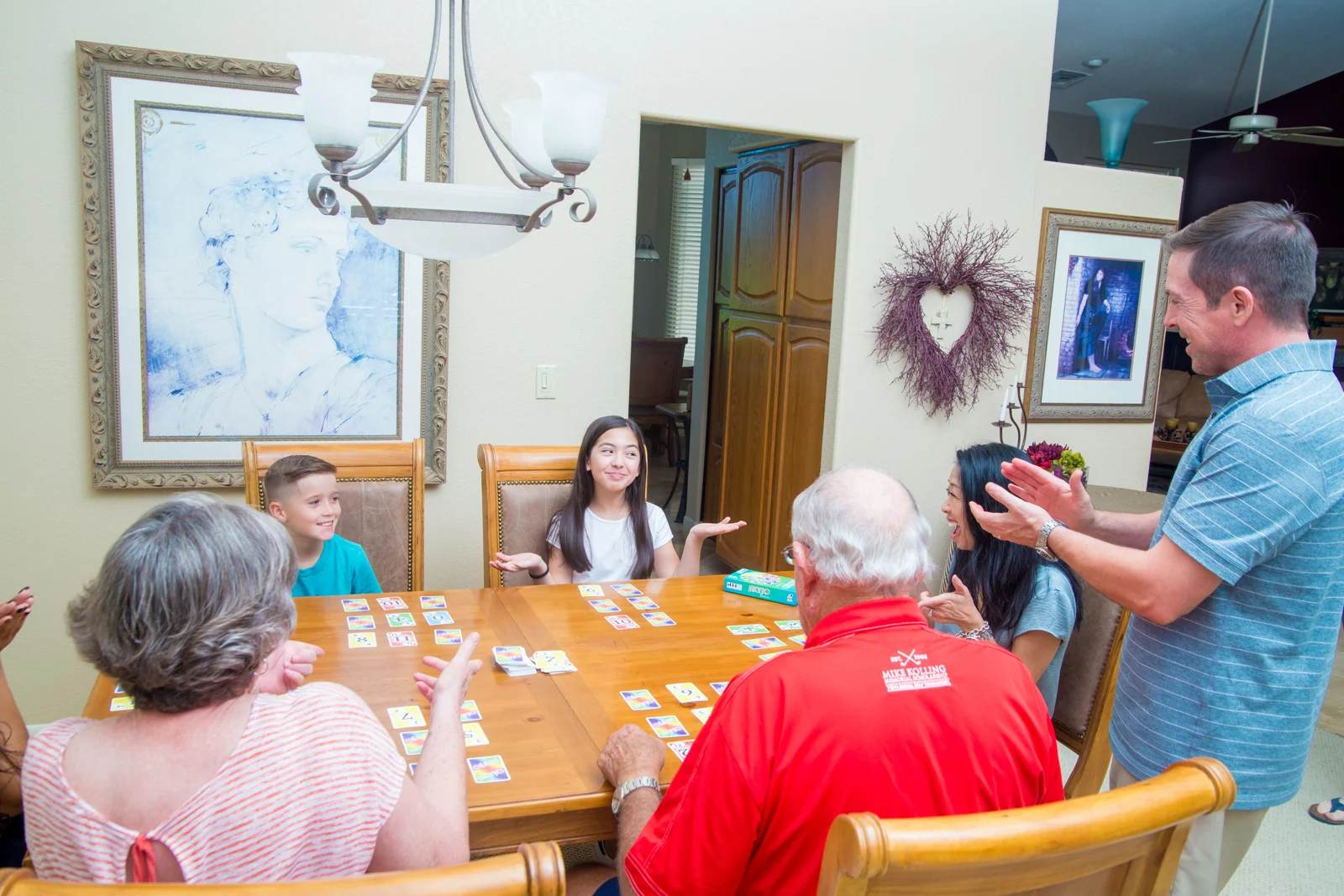
The essential difference: open tableau versus hidden hand
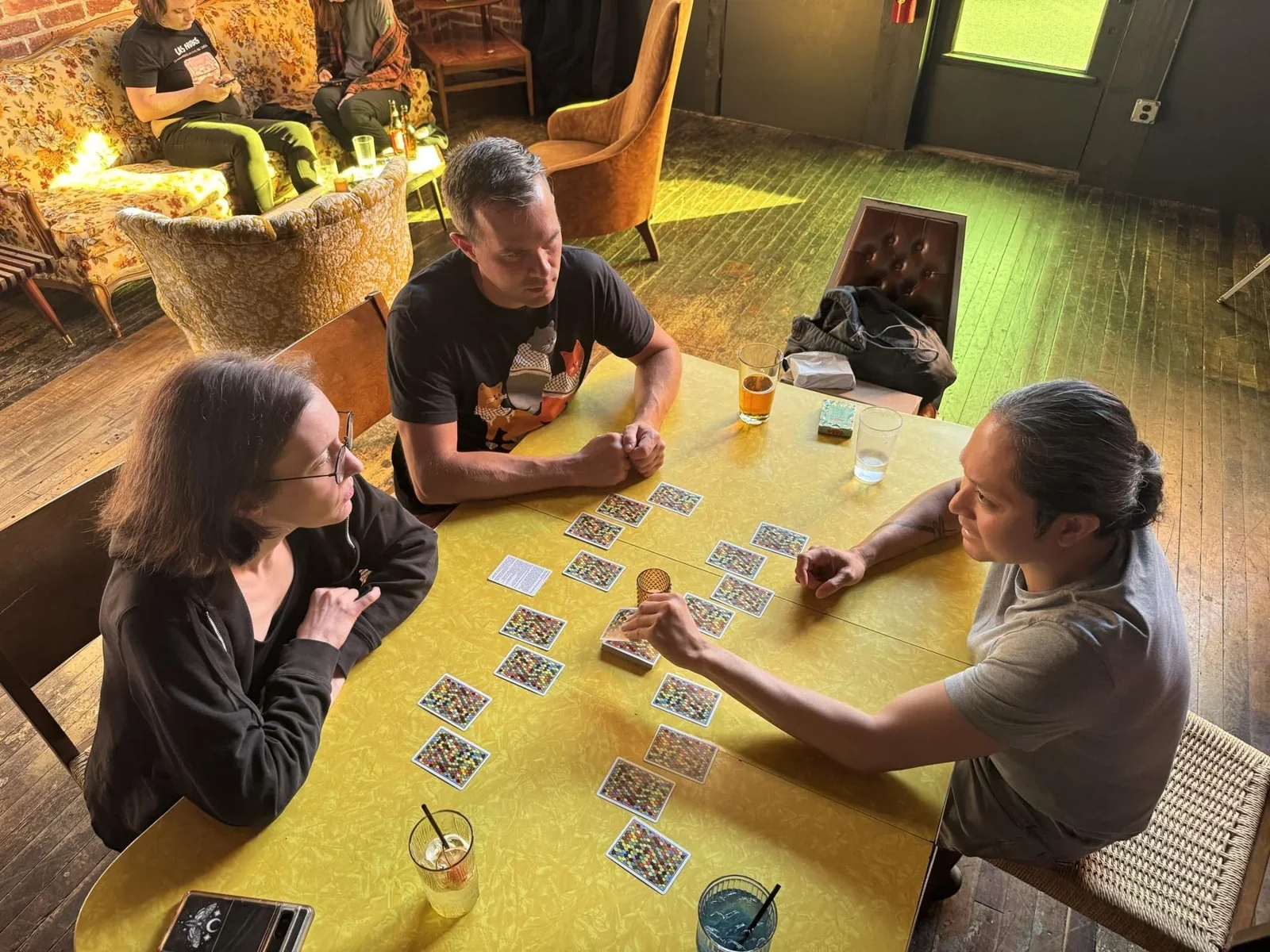
At a glance, SKYJO and Cabo sound almost interchangeable: replace cards, keep your total low, and survive several rounds. The useful distinction is what you are allowed to know. In Classic SKYJO, each player arranges twelve cards in a three-by-four display and starts by turning two face up. As turns pass, more numbers become public. The table can see your developing score and your possible columns, even though your remaining face-down cards still contain surprises. In Cabo, each player holds four face-down cards and privately looks at two at the start of a round. Much of the game is remembering what you saw, inferring what others may hold, and deciding when imperfect information is good enough to call the round.
| Question | Classic SKYJO | Cabo |
|---|---|---|
| Starting display | Twelve cards in a visible grid; two start face up | Four face-down cards; you privately view two |
| Main information task | Judge exposed numbers, hidden slots, and column opportunities | Remember identities and positions while deducing other hands |
| How a round closes | A player reveals their final hidden card | A player spends a turn calling “Cabo” |
That difference changes the room. SKYJO gives everyone a board to point at: a high exposed number looks dangerous, and three matching numbers in a column offer an obvious target. Cabo can feel quieter and more psychological because the most valuable fact may exist only in one player's memory. Both have hidden draws and uncertain outcomes; neither is simply a pure memory test or a pure push-your-luck game. Their rules reward different kinds of attention.
If your group wants easy visual feedback and a broad family table, start with the Classic SKYJO rules. If remembering one concealed card and deciding whether to trust that memory sounds more exciting, Cabo deserves a look. This comparison uses standard Classic SKYJO and the current Cabo publisher rules. SKYJO Action adds star and action cards, so its extra powers do not belong in the comparison below.
How turns work in each game
Both games put a face-down draw pile beside a face-up discard pile. That familiar setup can hide a costly mistake: the card you take determines what you may do next. Learning the two turn loops side by side is faster than memorizing a long feature list.
A SKYJO turn: exchange, reveal, or clear a column
In Classic SKYJO, you may take the top face-up discard and exchange it with one card in your twelve-card display. The discarded card must go into the grid; it is not a free option you can put back. Alternatively, draw blind from the pile. After seeing that card, either exchange it into your display or throw it onto the discard pile and turn one of your own face-down cards face up. An exchanged card is placed face up; the card it replaced goes to the discard pile. This is why even a disappointing blind draw advances the round: rejecting it reveals another piece of your display.
Suppose an exposed 10 sits in your grid and the discard pile shows a 2. Taking the 2 immediately saves eight visible points, but it also gives your next neighbor access to the 10. Now suppose two exposed 8s stand in one vertical column and a third 8 appears on top of the discard pile. Replacing that column's last position can erase all three 8s, a 24-point swing if the replaced position carried no other exposed value. That move is much stronger than judging the incoming 8 by its face value alone. The column has to be three matching numbers in a vertical line; matching a horizontal row is not the Classic rule. Read the full SKYJO turn and column rules if your table is still resolving those edge cases.
A Cabo turn: replace, use a choice card, or call Cabo
A Cabo turn asks a different question: should you improve your four-card hand, learn something, interfere with someone else, or end the round? A card drawn from the face-down pile may replace one of your cards. If it is a choice card, you may instead discard it to use its printed power. Peek shows you one of your own cards; Spy shows you another player's card; Swap exchanges one of yours with one of another player's without looking at the traded cards. You may also discard a blind draw unused. A card taken from the face-up discard pile must replace one of your cards; you cannot take it merely to trigger its power.
Calling “Cabo” is its own turn option, in place of drawing. Other players then get one final turn before the hands are revealed. There is also a special multi-card replacement: if you believe two, three, or four of your face-down cards match, you may replace that matching set with a single drawn or discarded card. A failed match costs the turn, so it is a calculated risk, not a free memory check. A player who remembers two matching cards can shrink a hand; a player who only thinks they remember can expose a costly error.
The practical split is easy to remember. SKYJO asks, “Which number or column should I improve while my tableau comes into view?” Cabo asks, “Which hidden card do I trust, and is information worth more than another replacement?” A player who enjoys planning from visible evidence may prefer the first loop. Someone who enjoys private clues, bluff and timing may find the second more rewarding.
Ending a round and counting the damage
The biggest strategic difference appears at the finish. In both games, the player who triggers the end has to live through everybody else's final turn. But the penalties are structured differently, and treating them as the same rule leads to bad calls.
SKYJO: revealing the last card is not always safe
A Classic SKYJO round ends when someone has revealed all of their cards. Every other player then gets one more turn. Remaining hidden cards are exposed for scoring, and complete matching vertical columns are removed. The person who ended the round needs the uniquely lowest round score. If another player scores less or ties, that finisher's positive round score doubles. The official rulebook explicitly exempts zero and negative totals from doubling.
A tie can be expensive.
You reveal your final card and finish with 10. A rival finishes with 10 after the last turn; a third player has 24. Your recorded round score is 20, while the tied rival records 10. Being first to finish has produced a ten-point loss, even though you tied for the lowest raw total.
This is why an exposed low grid can still be dangerous to close. You cannot see every opponent's hidden card, and the final turn can give a rival one more low replacement or a completed column. If your last hidden card is likely to leave you at 15 while a neighbor already shows a tiny grid, using a turn to exchange a visible high card may be safer than rushing the reveal. Of course, delaying also hands opponents more turns if they have not finished. The correct decision depends on what is exposed around the table, not a blanket rule to finish early or late.
Cabo: the call and its five-point risk
In Cabo, you use your turn to call “Cabo” instead of drawing. Everyone else gets one final turn. At reveal, the player with the lowest hand total records zero points; other players record their hand totals. If the caller is not lowest, they add a five-point penalty to their own hand value. The current publisher's rules give a caller who ties for lowest the zero-point result. That is the opposite tie consequence from SKYJO's positive-score doubling test.
Imagine you call with cards you believe total six. The reveal shows a six, but an opponent has four after their final turn. You record eleven: six for your hand plus the five-point failed-call penalty. If the opponent instead also has six and nobody is lower, your call succeeds under Cabo's tie rule and you record zero. The decision is about your confidence in both your own hidden cards and other players' ability to improve once you announce the finish.
Both games accumulate scores over rounds, but their full-game triggers differ. SKYJO stops after a round when any player reaches 100 or more cumulative points; the lowest total wins. Cabo's current rules say the game ends when a player exceeds 100. If your group normally plays a fixed number of rounds, that can be a perfectly workable short session, but label it as your chosen format rather than the standard end condition.
Where luck ends and decisions begin
Neither game promises that a clever player will overcome every poor draw. Shuffled cards decide the numbers available, and unseen cards can undo a good plan. The fairer question is what decision you can still make after the draw. In SKYJO, you choose a known discard or the uncertain deck, which position to exchange, and whether rejecting a blind draw is worth revealing one more hidden card. In Cabo, you decide whether to replace a card, spend a choice card on information or interference, attempt a matching-set replacement, or call the round. Those are real decisions with different costs, even if none can remove the randomness of the deck.
Consider a SKYJO grid with an exposed 9 and two exposed 7s in another column. A face-up 1 would lower the 9 safely by eight points. A 7 could remove a whole completed column if its third position is available, potentially saving more, but reaching that opportunity depends on card access and what is already face up. If no useful discard is showing, drawing blind gives a chance at a better card; rejecting it exposes a hidden number and moves the round toward its end. A player can choose the line with the better visible evidence, but cannot decree what sits under an unknown slot. That balance explains why some players enjoy the small tactical choices while others experience the game as swingy. A few online comments call SKYJO too dependent on luck; that is a player preference, not a measurement of the game's skill content.
Cabo's uncertainty is more personal. You may know that the second card in your hand is a 10 because you saw it earlier. A Peek card can resolve another unknown; a Spy can reveal a rival's card; a Swap can move risk between hands without letting you inspect the exchanged cards. Each action can improve your information or position, but spending a whole turn on information may let another player call before you use it. Likewise, confidently calling Cabo with two unknown cards may be bold rather than skillful. The smart line depends on what you remember accurately, which cards others have shown, and how near the table feels to a call.
SKYJO's clearest control
Use public numbers to plan exchanges, manage column value, and choose how fast to expose your grid.
Cabo's clearest control
Protect accurate memories, buy information at the right moment, and judge whether a call is worth the risk.
If someone at your table dislikes memory pressure, Cabo's four cards may feel harder than SKYJO's twelve, because most of Cabo's information is concealed. If someone dislikes waiting for a helpful number in a shared discard pile, Cabo's choice cards may feel more interactive. Neither observation proves one game is objectively more strategic. It tells you what sort of uncertainty your group is willing to enjoy. For more on managing the Classic grid, see our SKYJO strategy guide.
How long a game feels at two, four, and larger groups
A printed play time is a planning estimate, not a stopwatch result. Magilano gives Classic SKYJO an approximate 30-minute duration and supports two to eight players. Cabo's current publisher also describes a full game as roughly 30 minutes, with two to five players using one deck. Cabo rounds can be much shorter than a full game, and the publisher suggests a best-of-three quick format. That makes the common claim that one game is simply “faster” too blunt. Decide whether your invitation means one round, three rounds, or the standard race toward the scoring threshold.
At two players, each person acts frequently. SKYJO becomes a visible back-and-forth over the discard pile: if you reveal a helpful card, your only opponent may claim it next. Cabo becomes a tighter memory duel because there is only one rival hand to track and a call gives that person one last turn. Neither arrangement guarantees a shorter match; the number of rounds before a threshold and how long players deliberate will decide that. If you have only ten minutes, agree on a single round or the Cabo publisher's best-of-three alternate format before shuffling. Do not present a short custom session as the official full game.
At four players, both are within their normal range. SKYJO occupies more table surface: four separate twelve-card grids plus the central piles. Cabo needs much less space, but each additional opponent gives you another hidden hand to consider when someone calls. For a cafe table or a train tray, the physical footprint may decide before the theoretical strategic depth does. For a family table with room to spread out, SKYJO's exposed cards can help everyone follow why a move matters without asking the active player to explain their private memory.
With six to eight people and a single purchased deck, SKYJO is the straightforward fit because that is inside Magilano's supported count. Cabo's one-deck official maximum is five. The Cabo publisher discusses adding a second deck for larger groups, but that is a separate two-deck setup, not evidence that one box naturally handles eight. More players also means a longer wait between your turns in either game; even when turns themselves are short, scorekeeping and discussion can stretch an evening. If the table wants a lively opener, a pre-agreed round limit may help, while preserving the game's turn and scoring rules.
Both publishers mark their games for ages eight and up. That number does not tell you whether a particular child enjoys remembering concealed positions or adding the values of a twelve-card grid. Try a practice round and watch what actually creates friction: memory, arithmetic, waiting for a turn, or the risk of a penalty. The most useful time estimate is the one your own group gives you after that first round.
Which game should your group pick?
Pick Classic SKYJO when your group wants a shared visual puzzle and room for more people. Its grid makes progress legible to everyone: high cards are obvious, a nearly complete matching column is exciting, and each revealed card changes the public picture. You can teach the basic draw-or-discard choice quickly, then let the column and ender penalty give regular players something to think about. Six to eight people can use one standard SKYJO deck under Magilano's listed player count. This is especially attractive when the group wants to talk around a table rather than track several hidden hands.
Pick Cabo when the group enjoys memory, private information and the drama of a call. Four hidden cards require less space and create the pleasant suspicion that a rival knows more than they reveal. Peek, Spy and Swap give a player ways to buy certainty or disturb somebody else's plan, but those tools still cost a turn. The publisher's one-deck range is two to five people. It is a sensible game for a small cafe table or travel bag if your players are comfortable forgetting a card now and then—and laughing about the consequences.
| Your group's priority | Better starting choice | Why |
|---|---|---|
| Six to eight players, one deck | SKYJO | Inside its official player range |
| Small table or travel | Cabo | Four-card hands use less space |
| Easy-to-see progress | SKYJO | Exposed tableau shows the stakes |
| Memory and bluff | Cabo | Hidden cards and timed calls drive play |
For an undecided two-to-five-player group, do not ask whether one box is the “better game” in the abstract. Try one round of each and watch the reactions. Does the room lean in when someone sees two matching SKYJO numbers in a column? Or does everyone laugh when a Cabo call reveals a remembered card was in the wrong position? That response tells you more about repeat-play value for your friends than an average rating. If you can try only one, ask which frustration your group tolerates better: an unlucky unknown number in SKYJO or losing track of a hidden card in Cabo.
Before the first game, agree on three details. Read the rules for the edition actually on your table. Play a practice round so the draw-pile and discard-pile choices are clear. Then state whether you are playing the full scoring game or a short agreed format. In SKYJO, remember that a tied positive score can punish the player who ended the round. In Cabo, remember that a failed call adds five points and that other players take a last turn. Those are the moments most likely to turn an otherwise smooth introduction into an argument.
This comparison concerns Classic SKYJO. If the box says SKYJO Action or Junior, use that edition's rules; the extra cards and scoring are different. Start with the SKYJO beginner overview if the twelve-card setup is new to you, then choose the game whose central tension your group actually wants to experience again.

Loading comments...