SKYJO Card Game: Complete Beginner Overview
Everything you need to know to start playing SKYJO. Learn the rules, setup, strategy tips, and why this simple card game has become a worldwide family favorite.
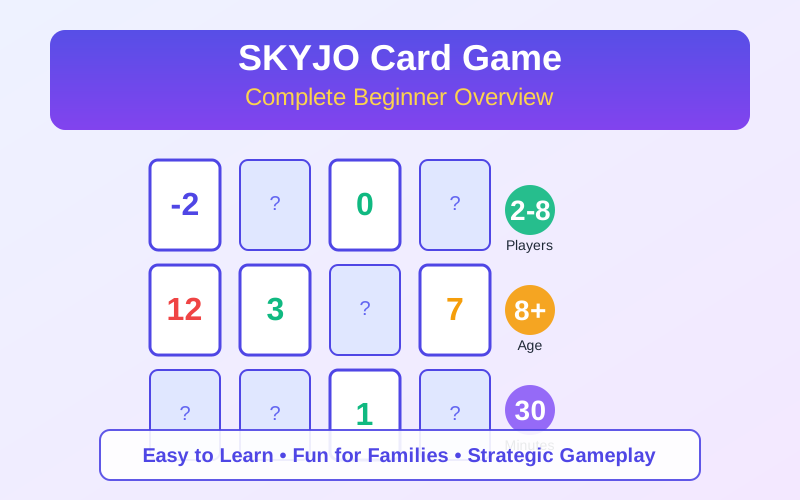
SKYJO Quick Facts
| Players | 2-8 players (best with 3-5) |
| Age Range | 8 years and up |
| Game Duration | 30-60 minutes |
| Objective | Have the lowest score when someone reaches 100 points |
| Total Cards | 150 cards (values from -2 to 12) |
| Designer | Alexander Bernhardt |
| Publisher | Magilano |
| Release Year | 2015 |
| Complexity | 1.07/5 (Very Easy) |
What is SKYJO Card Game?
SKYJO is a fast-paced, strategic card game designed by Alexander Bernhardt and published by Magilano in 2015. This lightweight number-based game has quickly become a family favorite worldwide due to its simple rules, quick gameplay, and perfect balance of luck and strategy.
Unlike most card games where you want the highest score, SKYJO flips the script: the player with the lowest score wins. This unique twist creates exciting gameplay where negative numbers are your best friends and high cards are your worst enemies.
SKYJO belongs to the "golf" family of card games, where players manage a grid of cards and try to minimize their total score across multiple rounds. The game ends when any player reaches 100 or more points, and the player with the lowest cumulative score wins.
Why SKYJO is Perfect for Beginners
Easy to Learn
Simple rules that anyone can understand in 5 minutes. Perfect for families and casual gamers.
Quick Gameplay
Games last 30-60 minutes with fast turns that keep everyone engaged and minimize downtime.
Strategic Depth
Easy to learn but offers meaningful decisions. Memory and risk assessment matter.
SKYJO Components: What's in the Box
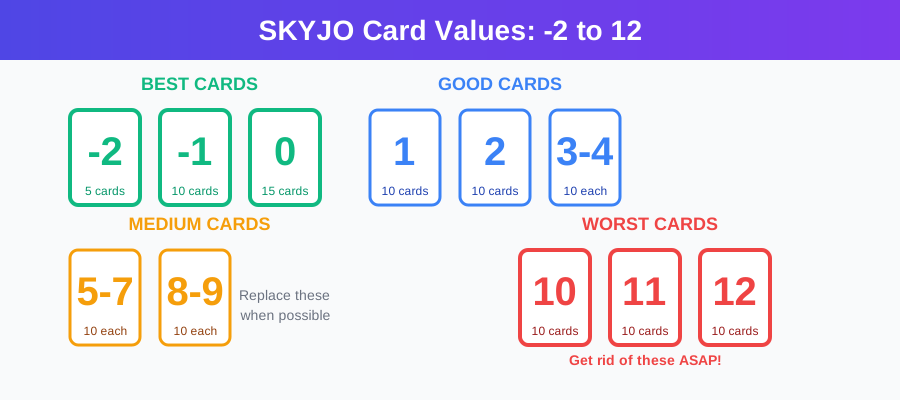
A standard SKYJO game comes with a single deck of 150 cards. That's it! No boards, no tokens, no complicated pieces. Just cards numbered from -2 to 12.
Card Distribution Breakdown
| Card Value | Quantity | Strategy Note |
|---|---|---|
| -2 | 5 cards | Best card in the game - always keep! |
| -1 | 10 cards | Excellent - reduces your score |
| 0 | 15 cards | Most common card - neutral and safe |
| 1 | 10 cards | Good - low positive value |
| 2 | 10 cards | Good - still worth keeping |
| 3 | 10 cards | Acceptable - borderline keep |
| 4 | 10 cards | Acceptable - replace if possible |
| 5-9 | 10 cards each | Medium - replace when you can |
| 10 | 10 cards | Bad - get rid of ASAP |
| 11 | 10 cards | Worse - high priority to replace |
| 12 | 10 cards | Worst - eliminate immediately! |
How to Set Up SKYJO
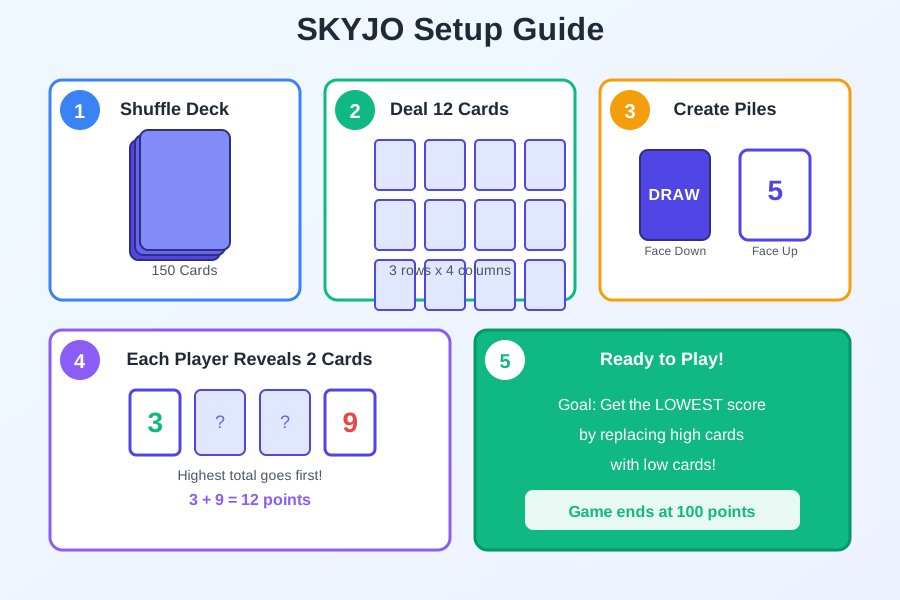
Setting up SKYJO takes less than 2 minutes. Follow these simple steps to get your game started:
Step-by-Step Setup Guide
Shuffle the Deck
Thoroughly shuffle all 150 cards together. Make sure they're well mixed!
Deal 12 Cards to Each Player
Each player receives 12 cards face down. Don't look at them yet!
Arrange Cards in a 3x4 Grid
Each player arranges their 12 cards face down in 3 rows and 4 columns in front of them.
Create Draw and Discard Piles
Place remaining cards face down as the draw pile. Flip the top card face up to start the discard pile.
Each Player Reveals 2 Cards
Every player randomly picks 2 cards from their grid and flips them face up.
Determine First Player
The player with the highest total from their 2 revealed cards goes first. Play proceeds clockwise.
How to Play SKYJO: Complete Rules
SKYJO is played over multiple rounds. Each round, players take turns trying to reduce their score by swapping high-value cards for lower ones. Here's exactly how each turn works:
Turn Structure Explained
On your turn, you must choose one of two options: draw from the discard pile or draw from the draw pile. Each option has different rules about what you can do next.
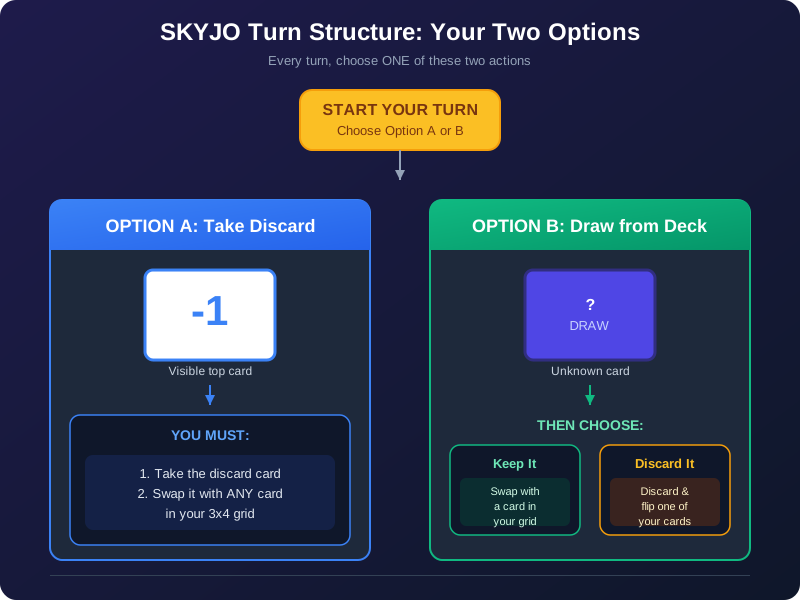
Option A: Draw from Discard Pile
Take the face-up card from the top of the discard pile. You can see exactly what you're getting!
Important Rule:
If you take from the discard pile, you must swap it with one of your grid cards (face-up or face-down). You cannot discard it back.
Option B: Draw from Draw Pile
Draw the top card from the face-down draw pile. Look at it, then decide:
- A. Keep it: Swap it with any card in your grid. The replaced card goes to the discard pile face up.
- B. Discard it: Place it on the discard pile, then flip one of your face-down cards face up.
The Column Elimination Rule
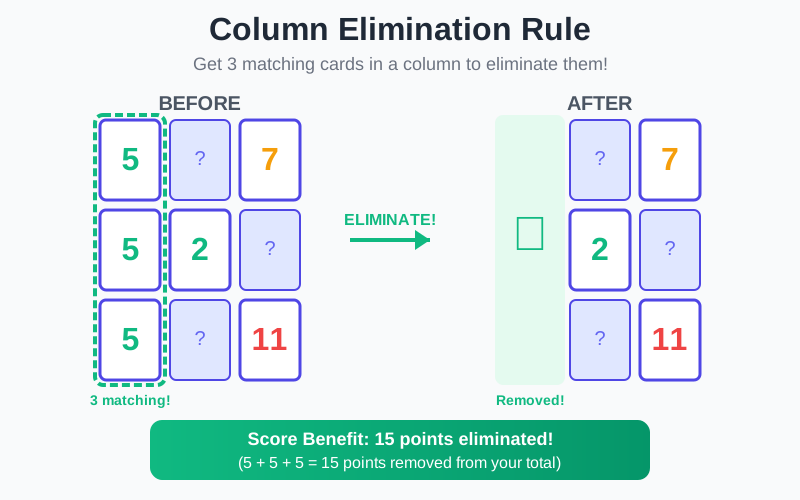
This is one of the most powerful rules in SKYJO! If at any time you have three revealed cards of the same number in a vertical column, you immediately discard the entire column. Those cards are removed from the game and no longer count toward your score.
Example: If you have three 5s stacked vertically in a column, all three are removed. That's 15 points eliminated from your score!
Scoring and Winning SKYJO
How Scoring Works
At the end of each round, all players flip their remaining face-down cards and add up the values of all cards in their grid. This total is added to their cumulative game score.
End of Round
A round ends when one player reveals all their cards. Everyone else gets one final turn, then all remaining face-down cards are flipped.
The Doubling Penalty
If the player who ended the round does NOT have the lowest score, their round score is doubled (only if positive). This is a major risk!
Game Over
The game ends when any player reaches 100 or more points. The player with the lowest total score wins!
Scoring Example
| Player | Round 1 | Round 2 | Round 3 | Total |
|---|---|---|---|---|
| Alice | 12 | 8 | -3 | 17 |
| Bob | 5 | 22 | 15 | 42 |
| Carol | 18 | 30 (doubled!) | 9 | 57 |
Beginner Strategy Tips
While SKYJO has an element of luck, smart strategy can significantly improve your chances of winning. Here are the essential tips every beginner should know:
Essential Tips for New Players
Only Keep Low-Value Cards
The best strategy is to only keep cards with values 4 or lower. When drawing from the deck, if you pick a card valued at 5 or higher, it's often better to discard it and flip one of your face-down cards.
Reveal Cards Early
Strive to reveal up to 9 cards early in the game, but leave some face-down for flexibility. Revealing cards gives you information, but keeping some hidden provides options for later turns.
Build Around Zeros
With 15 copies in the deck, 0 is the most common card. Building around zeros makes your grid stable and gives you a solid foundation for winning long games.
Group Negative Cards
If you turn up a -1 or -2, designate that column for collecting negative numbers. This increases your chances of eliminating other columns while keeping valuable negative points.
Don't Rush to End the Round
Unless you have significantly fewer points (12 or more), it's probably too soon to end the round. The doubling penalty for going out first without the lowest score is often a game-losing mistake.
Watch Your Opponents
Track which cards opponents have revealed. Knowing an opponent has several high cards might encourage you to end the round early, while seeing mostly low values suggests patience.
Common Mistakes to Avoid
Mistake 1: Rushing to Replace High Cards
Many new players rush to swap out 10s, 11s, or 12s immediately. But if you have two of the same high number in a column, consider keeping them - getting the third card eliminates all three, saving more points than replacing them individually.
Mistake 2: Leaving Too Many Cards Face Down
You could do a great job reducing your face-up cards, then have an 11 or 12 that you never revealed. This will kill your score for the round. Balance information gathering with strategic flexibility.
Mistake 3: Helping Your Opponents
Avoid discarding low-value cards that benefit the next player. Always watch what cards your opponents need and try not to give them easy wins.
Mistake 4: Trying to Win Every Round
SKYJO consists of multiple rounds. Sometimes it's better to lose small than to risk the doubling penalty. Focus on the long game, not individual rounds.
SKYJO vs Other Card Games
How does SKYJO compare to other popular family card games? Here's a quick comparison:
| Feature | SKYJO | UNO | Phase 10 |
|---|---|---|---|
| Complexity | Very Easy (1.07/5) | Very Easy | Easy-Medium |
| Game Length | 30-60 minutes | 15-30 minutes | 60-90 minutes |
| Strategy Level | Light-Medium | Light | Light-Medium |
| Player Count | 2-8 (best 3-5) | 2-10 | 2-6 |
| Luck vs Skill | 60% Luck / 40% Skill | 70% Luck / 30% Skill | 65% Luck / 35% Skill |
| Best For | Families, casual gamers | Kids, quick games | Longer game nights |
The Verdict
SKYJO sits in a sweet spot between UNO's simplicity and Phase 10's length. It offers more strategic depth than UNO while being faster and more accessible than Phase 10. Perfect for families who want something with meaningful decisions but easy-to-learn rules.
Where to Buy SKYJO
SKYJO is widely available both online and in retail stores. Here are the best places to purchase:
Local Game Stores
Support local businesses! Many board game shops carry SKYJO.
Check your local game store's inventory
Price Range
SKYJO typically retails for $15-20 USD. Watch for sales during Black Friday, Prime Day, and holiday seasons when prices can drop to $12-15.
Note: Prices may vary by retailer and region. Always check multiple sources for the best deal.
Frequently Asked Questions
How many cards do you start with in SKYJO?
Can you play SKYJO with 2 players?
What happens if you run out of cards in the draw pile?
Do you have to flip 2 cards at the start?
Can you eliminate a column with face-down cards?
What's the lowest possible score in a round?
Is SKYJO suitable for kids?
How long does a typical SKYJO game last?
Are there different versions of SKYJO?
Can you play SKYJO online?
Ready to Play SKYJO?
Now that you know the rules and strategies, it's time to get your own copy and start playing! SKYJO is perfect for family game nights, casual gatherings, and travel.

Loading comments...