
2026 World Cup · SKYJO explained
Why England's 2026 World Cup Squad Played SKYJO
Jude Bellingham brought SKYJO into England's World Cup camp, according to teammate Morgan Rogers. What happened, why might this little card game suit a six-person coffee-shop break, and how can you try the low-score contest yourself? This guide separates the reported moment from the rules, the UK retail timeline and the guesses a viral story can invite.
The card game inside England's 2026 World Cup camp
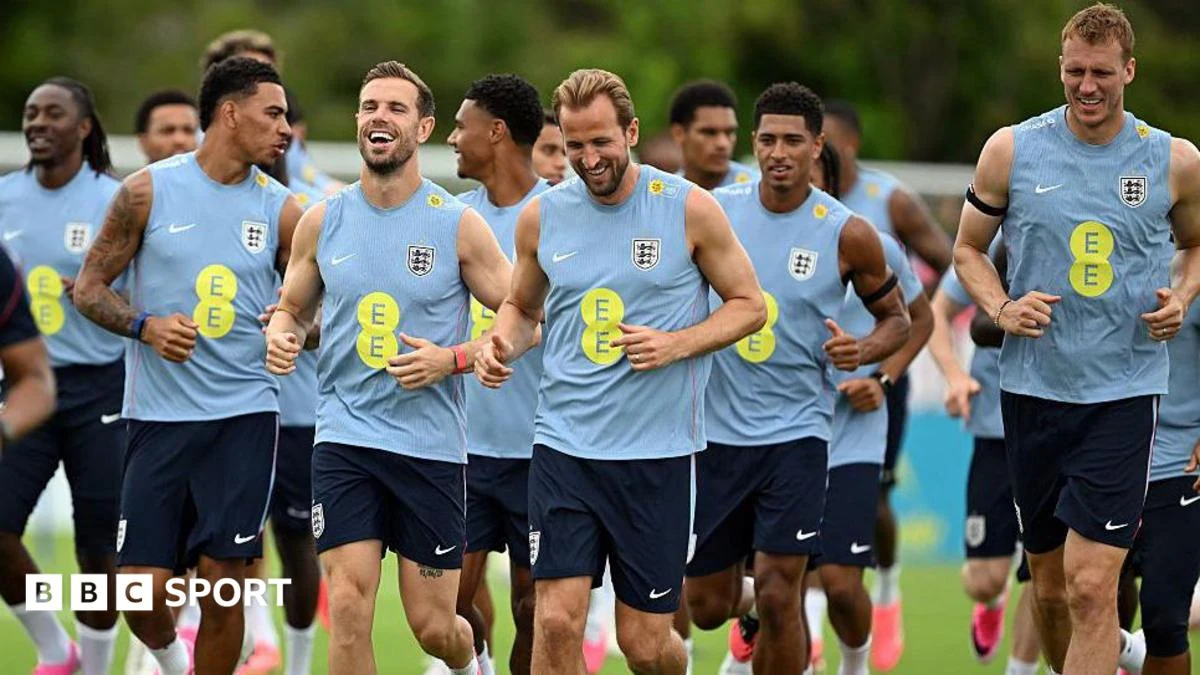
In June 2026, SKYJO became an unlikely detail of England's World Cup story. The tournament coverage was about matches, selections and pressure, but BBC Sport's report from the England camp also described what some players did away from the training ground. Morgan Rogers said Jude Bellingham had brought a card game into the group. The game was SKYJO, a contest in which the lowest score wins.
That is a more specific story than a vague claim that “England played SKYJO.” Rogers described a ride to a coffee shop followed by a game with Bellingham, Jordan Henderson, Dan Burn, Anthony Gordon and Elliot Anderson. He was pleased to say he won. It is a small, vivid picture: six players, a table, and a game whose lead can change when one hidden card is finally revealed. It also tells us the sensible limit of the reporting. We have evidence for a named group enjoying a session, not a count of how often every member of the squad played.
What Morgan Rogers actually said
Rogers credited Bellingham with bringing the game and described the group as caught up in it. His words, “we're addicted at the moment,” explain why the anecdote travelled: it sounded like players telling friends about a discovery, rather than a planned product campaign. Later, UK toy-industry coverage picked up the story and quoted the game's distributor. That later commercial reaction should not be mistaken for evidence of what happened around the coffee-shop table.
The date matters too. The BBC report was published on 26 June 2026, during the World Cup. Read in September, it is a documented tournament moment, not breaking news or a claim about what the players are doing today. If you found SKYJO through a clip or headline and want to understand the appeal, start with the game Rogers was describing: a low-score card game that turns a brief break into a running contest. The next sections explain why its format suits a group and what you would actually do on your first turn.
Why SKYJO suited a squad's downtime
Rogers did not give a design review or explain why he and his teammates picked SKYJO over every other game. We can, however, test the game's format against the scene he described. Magilano's Classic SKYJO rulebook specifies 2–8 players, a pack of 150 cards, and an approximate 30-minute game. A reported group of six fits that range at one table. You can carry cards and a score pad to a coffee shop without reserving a large surface for a board, pieces or a complicated setup. Those are observable properties of the product; whether they were the players' own reasons is unknown.
The objective is equally easy to say across a table: finish with fewer points than everyone else. That single sentence does not remove the choices. Every player starts with hidden information, gradually exposes a personal grid, and decides whether a visible discard or a blind draw is worth replacing one of their cards. A teammate can look comfortable because several low cards are showing, then uncover a high card late in the round. Someone else may clear an entire matching column and suddenly cut their total. Even when it is not your turn, the table can see enough to react to a risk or a lucky reveal.
That rhythm is a plausible reason a group might want another round. It gives room for conversation between moves while keeping a small shared contest alive. It also explains why calling SKYJO a pure memory game misses its appeal: you remember what has been revealed, but you still choose when to take a known card, when to gamble on an unknown one, and when to end a round. The publisher's 30-minute figure is a useful planning guide, not a stopwatch guarantee. Six players chatting over coffee may move at a different pace from two players at home.
BBC Sport reported other games in England's downtime, including Wolf and Imposter. That detail helps place SKYJO among leisure activities rather than turning one card game into a theory about the team's results. Shared games can provide a break from match preparation; this particular report does not show that SKYJO changed team chemistry or performance. The honest takeaway is narrower and more useful: the rules and player range make it easy to understand how six people could pick it up together. If that is the kind of game night you want, the SKYJO review examines the experience beyond the football headline.
How Classic SKYJO works at the table
If the football story made you want to join the next game, you do not need a long lesson before your first turn. The useful starting point is Magilano's Classic rulebook: accumulate as few points as possible over several rounds. Cards carry numbers, including negative values. The decisions come from replacing numbers you can see while many of your own cards remain unknown. The following walkthrough is for Classic SKYJO; Action has additional cards and procedures.
Set up twelve cards and reveal two
Deal each player 12 cards face down in four vertical columns of three. Put one card face up in the centre to start the discard pile and leave the rest face down as the draw pile. Each person turns any two cards of their own grid face up. For the first round, the player whose two visible cards have the highest combined value starts. In later rounds, the player who ended the previous round starts. This is enough setup for two people or the six-person group Rogers described; the published game range is two to eight.
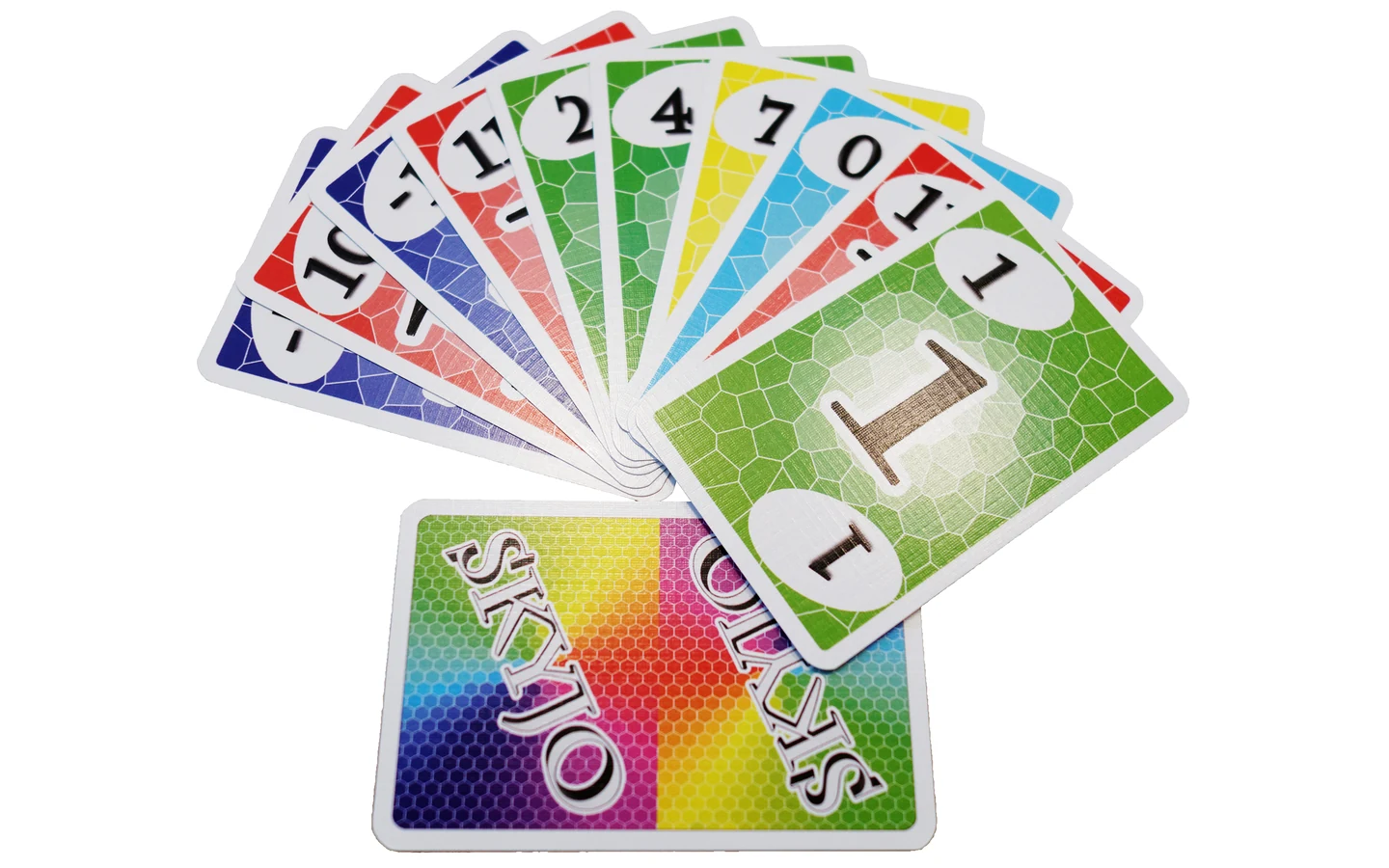
Imagine your opening two cards are an 11 and a 2. You already know that the 11 is expensive, but you do not know what sits behind the other ten backs. An exposed low card is not automatically a safe replacement target, because a high unseen card might still be waiting elsewhere. The opening is a balance of known value and hidden risk, not a memory test in which you are allowed to inspect your grid before playing.
Choose the discard or draw pile
A turn begins with a choice between the visible top discard and a face-down card from the draw pile. Those choices have different obligations. Take the visible discard and you must exchange it with one card in your grid, whether that grid card is face up or face down. You cannot secretly look at a hidden card before replacing it. If you draw from the face-down pile, you may look at the drawn card first. Keep it and exchange it in the same way, displaying the replacement face up; reject it and you must put the drawn card on the discard pile and reveal one of your still-hidden grid cards.
| Your draw | What you may do | What changes on the table |
|---|---|---|
| Top face-up discard | Swap it with one grid card | New card is face up; replaced card goes to discard |
| Top face-down draw | Look, then swap or reject | If rejected, discard it and reveal one hidden grid card |
Suppose a 3 is showing on the discard pile while your 11 is exposed. Swapping the 3 for the 11 cuts the visible value of your grid by eight points before any other effect. The trade-off is information: everyone sees your 3, and you give the next player an 11 on top of the discard pile. A blind draw might yield something better than 3, but it might also leave you rejecting a high card and exposing an unpredictable hidden one. This is why the apparently simple choice can keep a whole table engaged.
Clear columns and count the round
If all three cards in one vertical column show the same number, remove that whole column to the discard pile. The rule is compulsory. Three 12s disappearing is excellent because 36 points leave your grid; three negative cards disappearing can hurt because those cards would have reduced your score. Only a vertical group of three qualifies in Classic SKYJO. Do not borrow Action's star-card or horizontal-row rules when evaluating the England story.
A round is triggered to end when someone has revealed all their cards. Each player who follows that person in turn order gets one more move, then hidden cards are exposed and every remaining number in each grid is added. The player who ended the round faces an extra risk: if someone else has a lower or equal round score, that ender's positive round points double. A zero or negative round score is exempt. For example, an ender on 10 points who ties another player on 10 records 20 for that round. That penalty can overturn what looked like a comfortable lead.
Record every player's round score and continue until someone reaches 100 or more cumulative points. The lowest total then wins. You can learn those details with the site's illustrated SKYJO rules page beside the deck. The practical lesson from one demonstration turn is already clear: reduce high known cards when you can, but watch both the hidden cards you expose and the moment you invite the final score.
What the World Cup story means for UK availability
The England story made SKYJO more visible to football readers, but it did not create the game's UK distribution plan. That distinction matters if you are trying to work out whether the game was newly released, hard to find, or suddenly sold out because a player mentioned it. Public reports establish a sequence of announcements and attention. They do not give a credible before-and-after sales count, so a claim that Bellingham caused a measurable buying rush would go beyond the evidence.
The UK distribution deal came first
Toy World reported on 19 March 2026 that VR Distribution had partnered with Magilano to bring SKYJO to the UK and Ireland. That announcement spoke of a June launch and retailer pre-orders. At the UK Games Expo in late May, Geek Native reported that expected stock had missed the convention and that VR Distribution was aiming first at independent game stores, then at a wider retail push in August. Those are dated plans and trade reports; neither establishes that every promised shop had stock on the announced day.
| Date | What was reported | What it does not prove |
|---|---|---|
| 19 March 2026 | UK/Ireland distribution partnership announced | That all stores already carried the game |
| 30 May 2026 | Retail rollout plans discussed at UK Games Expo | That the planned rollout finished on schedule |
| 26 June 2026 | BBC published Rogers's England-camp account | That football exposure caused the earlier deal |
By September, local Google results showed a mix of large-store and independent UK listings. That is useful as a starting point, not a promise of current stock at your nearest branch. Search results can lag; listings can mix Classic, Action, Junior and Voyage; and marketplace sellers can change. Before paying, check the edition printed on the box, the language of the included rules, the seller, delivery area and the total after shipping. If a headline simply says “SKYJO,” do not assume it is the version you meant to buy.
For current retailers and edition checks, use the site's UK buying guide as a route to the shops, then verify the live listing yourself. The World Cup anecdote is a reason you may have heard of the game; the earlier distribution timeline explains why UK listings existed independently of that anecdote. Keeping those two facts apart makes the buying decision much simpler.
How a new fan can try the same game
There is one final caution before buying the first result you see. BBC Sport identified the game as SKYJO but did not establish which box or edition was on the England players' table. The clearest way to explore the low-score gameplay described in the report is to learn standard Classic SKYJO first. That is a recommendation for a newcomer, not a claim that Rogers and Bellingham used a particular printed edition. It keeps the first session focused on the draw, swap, reveal and column decisions rather than additional effects.
Choose Classic before judging Action
Magilano sells both Classic SKYJO and SKYJO Action. Both aim for a low score, but Action adds star cards and a separate set of action cards. Those bring extra tactical options and more direct interaction. They also give first-time players more rules to track. Action can be an excellent choice for a group that already enjoys the basic loop and wants a livelier contest. It is not necessary to buy both boxes to understand why a six-person game over coffee might be absorbing.
For a first gathering, teach the Classic turn structure and play a complete round before deciding whether the pace suits your friends. Watch for one moment everyone can understand: a player takes a visible low card, but doing so puts their discarded card where the next person can use it. Then watch what happens when the first grid is fully revealed and the table gets its last moves. That combination of readable choices and late risk explains the appeal more clearly than a product label or a famous player's name.
Try a physical deck or a browser table
If you already have a deck, open the rules guide while dealing and keep a score pad nearby. A physical copy is the direct route to the shared-table experience described by Rogers. For UK buyers, the current retailer guide can help you compare places to look, but verify the exact edition, language, seller and delivery terms on the live product page. Stock and price are moving targets; the number of teammates in a June interview is not a reliable shopping forecast.
If your group is remote or wants to learn before buying, SKYJO.info's browser game offers a free, no-download way to try the core decisions, including solo practice and friend rooms. This site is an independent fan project, not Magilano's official digital product, so treat the printed publisher rules as the authority if a digital implementation or another app differs. After a game or two, you can make a useful choice of your own: keep the fast, simple Classic table, explore Action's extra interactions, or just use the online version when your friends are in different places. That is a better reason to stick with SKYJO than any headline about who first brought the cards to camp.

Loading comments...