SKYJO Rules: Complete Official Guide to Playing & Winning
Master the complete rules of SKYJO with this comprehensive guide. Learn setup, gameplay, scoring, and winning strategies for this addictive card game.
SKYJO Quick Facts
| Players | 2-8 players (best with 3-5) |
| Age Range | 8 years and up |
| Game Duration | 30-60 minutes |
| Objective | Have the lowest score when someone reaches 100 points |
| Total Cards | 150 cards (values from -2 to 12) |
| Designer | Alexander Bernhardt |
| Publisher | Magilano |
| Release Year | 2015 |
What is SKYJO?
SKYJO is a fast-paced, strategic card game designed by Alexander Bernhardt and published by Magilano in 2015. The game has quickly become a family favorite worldwide due to its simple rules, quick gameplay, and perfect balance of luck and strategy.
Unlike most card games where you want the highest score, SKYJO flips the script: the player with the lowest score wins. This unique twist creates exciting gameplay where negative numbers are your best friends and high cards are your worst enemies.
Easy to Learn
Simple rules that anyone can understand in 5 minutes. Perfect for families and casual gamers.
Quick Rounds
Each round takes 10-15 minutes, making it perfect for multiple games in one sitting.
Strategic Depth
Memory, risk assessment, and timing decisions create engaging strategic gameplay.
SKYJO Game Components: What's in the Box
Card Breakdown
The SKYJO deck contains 150 cards with values ranging from -2 to 12:
What You Get
- 🎴150 Playing Cards
High-quality cards with vibrant colors and clear numbering
- 📋Instruction Manual
Complete rules in multiple languages
- 📦Compact Storage Box
Portable box perfect for travel and storage
How to Set Up SKYJO: Step-by-Step Guide
Shuffle the Deck
Thoroughly shuffle all 150 cards together. Make sure they're well mixed to ensure random distribution.
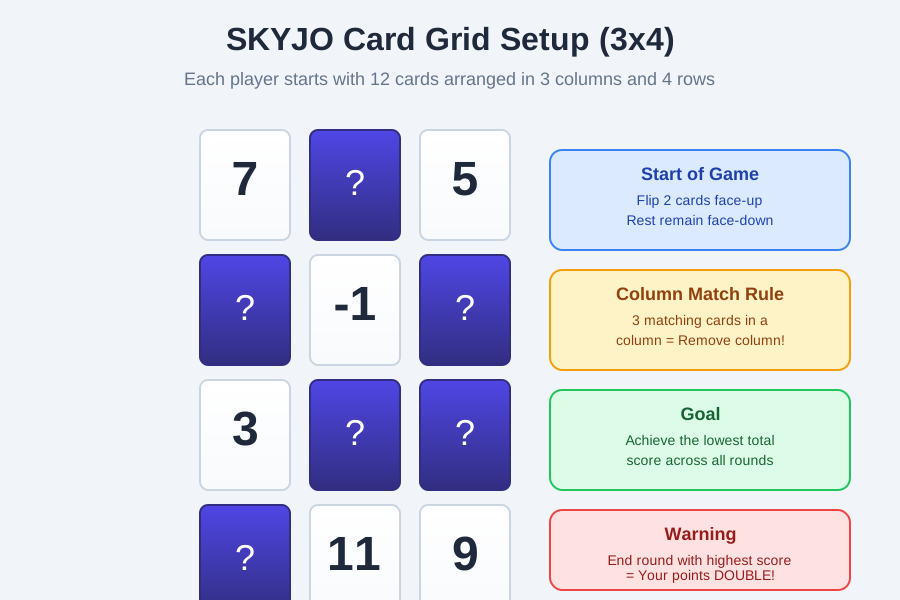
Deal 12 Cards to Each Player
Deal 12 cards face down to each player. Players should not look at their cards.
Arrange Cards in a 4x3 Grid
Each player arranges their 12 cards into a grid with 4 columns and 3 rows, all face down.
Create Draw and Discard Piles
Place remaining cards in the center as the draw pile. Flip the top card face up to start the discard pile.
Reveal Two Starting Cards
Each player chooses any two cards from their grid and flips them face up.
Determine the Starting Player
All players add up their two face-up card values. The player with the highest total goes first. In subsequent rounds, the player who ended the previous round goes first.
Complete SKYJO Rules & Gameplay
SKYJO is played over multiple rounds. Each round continues until one player reveals all their cards. The game ends when a player reaches 100 or more points, and the player with the lowest total score wins.
How to Play Your Turn
On your turn, you have two options. Choose one:
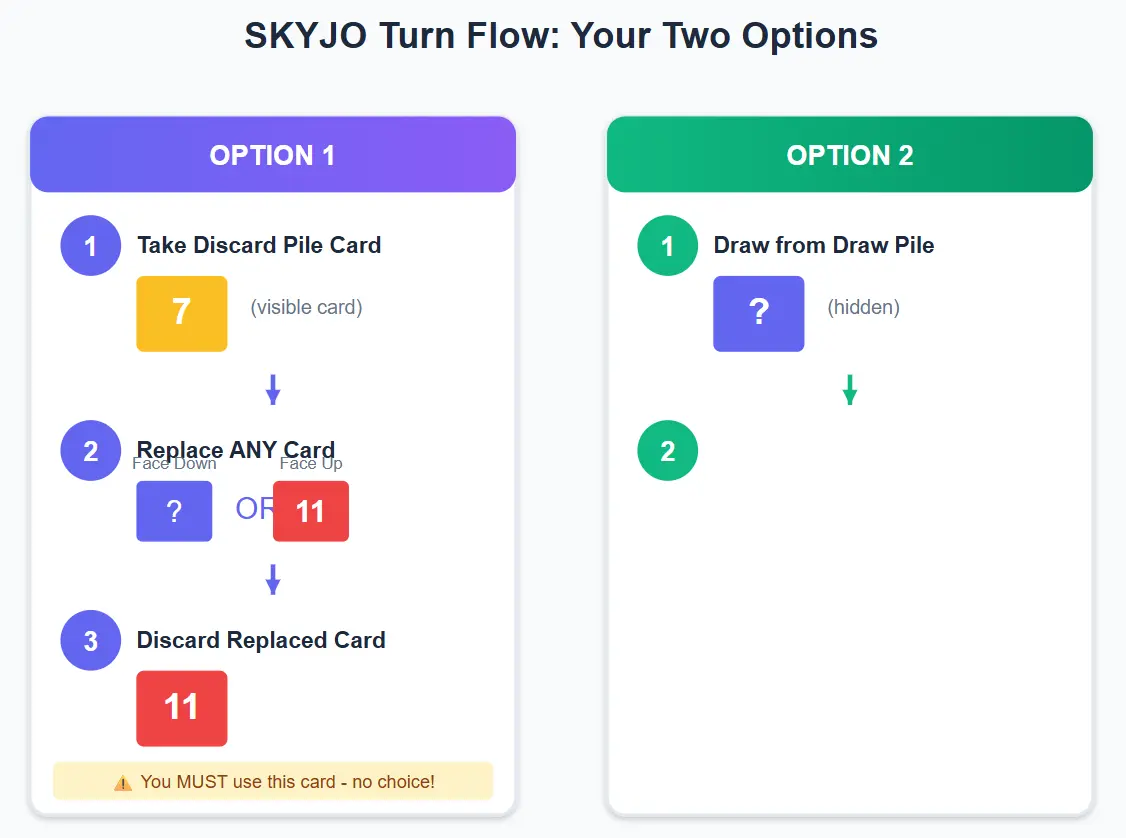
Draw from Discard Pile
- 1.Take the top card from the discard pile (you can see its value)
- 2.Replace ANY card in your grid with this card
- 3.Place the replaced card face up on the discard pile
Important: You MUST use the discard pile card - you cannot put it back!
Draw from Draw Pile
- 1.Draw the top card from the draw pile
- 2.Look at the card (don't show others)
- 3.Choose one:
Keep it: Replace any card in your grid
Discard it: Flip one face-down card in your grid
Advantage: You see the card before deciding!
Strategic Decision Making
When to replace a face-down card:
- • You drew a low or negative card
- • You want to discover unknown cards
- • You're trying to complete a column
When to replace a face-up card:
- • You have a high card showing (10, 11, 12)
- • The drawn card is significantly lower
- • You're confident about your face-down cards
Special Rule: Column Elimination
This is SKYJO's most powerful rule - master it to dominate the game!
When you have three identical cards in a vertical column (all face up), you immediately discard all three cards. This can save you massive points!
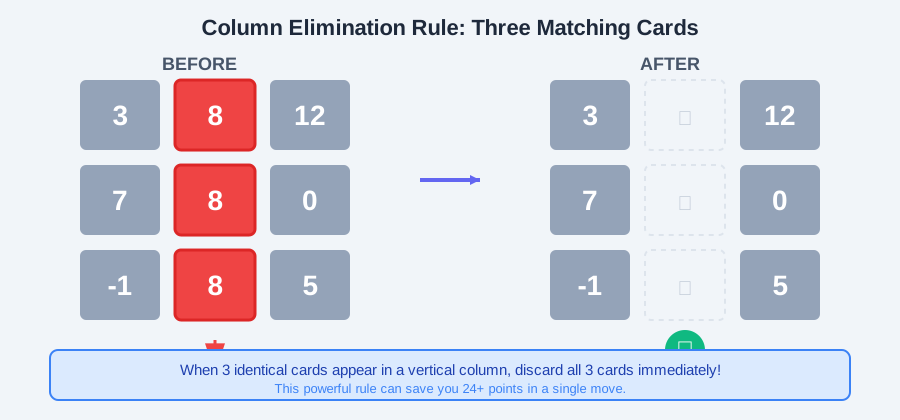
How It Works
- 1.Three identical cards appear in a vertical column
- 2.All three cards must be face up
- 3.Immediately remove all three cards
- 4.Place them on the discard pile
- 5.Those positions remain empty for scoring
Important Notes
- •Only vertical columns count (not rows)
- •All three cards must be face up
- •Happens immediately when the third card is revealed
- •Can happen during end-of-round reveal
- •Empty spaces count as 0 points
Strategic Value Examples
Three 12s
-36
points saved!
Three 8s
-24
points saved!
Three -2s
+6
points lost (avoid!)
SKYJO Scoring System Explained
How Rounds End
A round ends when one player reveals all 12 of their cards (all cards face up).
Once this happens, all other players get one final turn, then everyone reveals any remaining face-down cards.
Calculating Your Score
Add up all the values of your cards (including empty spaces from column elimination, which count as 0).
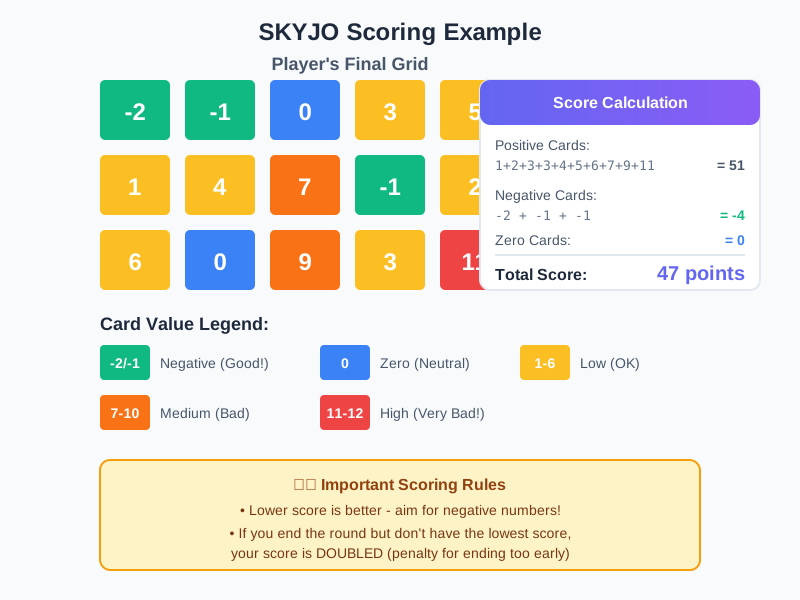
⚠️ The Double Score Penalty
If you end the round (reveal all your cards first) but don't have the lowest score, your score is DOUBLED!
Example:
- • You end the round with 35 points
- • Another player has 32 points (lower than you)
- • Your score becomes 70 points (35 × 2)
This penalty prevents players from ending rounds too early!
Winning the Game
Game End Condition
The game ends when any player reaches 100 or more points.
The player with the lowest total score wins!
Typical Game Length
Most games last 3-5 rounds
Total playing time: 30-60 minutes
Score Tracking Example
| Player | Round 1 | Round 2 | Round 3 | Round 4 | Total |
|---|---|---|---|---|---|
| Alice | 15 | 22 | 18 | 31 | 86 ✓ Winner! |
| Bob | 28 | 19 | 35 | 25 | 107 |
| Carol | 12 | 48 (×2) | 20 | 16 | 96 |
Note: Carol's Round 2 score was doubled (24 × 2 = 48) because she ended the round but didn't have the lowest score.
How to Win at SKYJO: Pro Tips & Strategies
Prioritize Negative Cards
Always keep -2 and -1 cards. These are your best friends and can significantly lower your score. Never replace them unless completing a column elimination.
Target High Cards First
Replace cards valued 10, 11, and 12 as soon as possible. These high cards can ruin your score, so swap them out for anything lower.
Master Column Elimination
Actively work toward creating three matching cards in a column. This is especially valuable for high-value cards (8-12). Track what cards have been played.
Memory is Key
Remember which face-down cards you've seen and where they are. This helps you make better decisions about which cards to replace.
Don't End Too Early
Be cautious about revealing your last card. If you don't have the lowest score, your points double! Only end when you're confident you're winning.
Watch Your Opponents
Pay attention to what cards opponents are revealing and discarding. This gives you clues about their strategy and helps you estimate their scores.
Draw Pile vs Discard Pile
Generally prefer the draw pile (you see the card first). Only take from discard if it's a very low card or helps complete a column.
Balance Risk and Reward
Sometimes it's worth keeping a medium card (4-6) rather than risking a face-down card that might be worse. Calculate the odds based on what's been played.
Advanced Strategy: Card Counting
Track which cards have been played to estimate probabilities:
- • If many high cards (10-12) have been played, your face-down cards are more likely to be low
- • If few negative cards have appeared, there's a better chance of drawing them
- • Count how many of each number remain to assess column elimination chances
Common SKYJO Mistakes to Avoid
❌ Ending the Round Too Early
Don't reveal your last card unless you're confident you have the lowest score. The double-score penalty is devastating!
❌ Ignoring Column Elimination
Many beginners forget about this powerful rule. Always look for opportunities to create matching columns, especially with high cards.
❌ Taking Every Discard Pile Card
Just because you can see the discard card doesn't mean you should take it. Drawing from the deck gives you more flexibility.
❌ Not Tracking Revealed Cards
Forgetting what's in your face-down cards leads to poor decisions. Try to remember at least your highest and lowest hidden cards.
❌ Replacing Low Cards
Never replace cards valued 0-3 unless you're getting negative cards or completing a column. These are already good scores.
❌ Forgetting the Grid Layout
Column elimination only works vertically, not horizontally. Don't waste effort trying to match rows.
SKYJO Pros & Cons
✓ Pros
- ✓ Easy to learn - Rules explained in 5 minutes
- ✓ Quick gameplay - Rounds take 10-15 minutes
- ✓ Scales well - Fun with 2-8 players
- ✓ Strategic depth - Memory and risk management matter
- ✓ Family-friendly - Perfect for all ages 8+
- ✓ Portable - Compact box, easy to travel with
- ✓ High replayability - Every game feels different
- ✓ Affordable - Great value for the price
✗ Cons
- ✗ Luck-dependent - Card draw can heavily influence outcomes
- ✗ Limited theme - Just numbers, no story or theme
- ✗ Downtime - Can be slow with 7-8 players
- ✗ Memory intensive - Requires tracking many cards
- ✗ Runaway leader - Hard to catch up if far behind
- ✗ No score pad included - Need paper to track scores
Frequently Asked Questions
Can you play SKYJO with 2 players?
Yes! SKYJO works well with 2 players, though it's most fun with 3-5 players. With 2 players, the game is faster and more strategic since you can better track what cards your opponent has.
What happens if two players tie for the lowest score?
If the player who ended the round ties with another player for the lowest score, they do NOT get the double-score penalty. The penalty only applies if someone else has a lower score.
Can you replace a face-down card with the discard pile card?
Yes! When you take a card from the discard pile, you can replace ANY card in your grid - either face-up or face-down. However, you cannot look at a face-down card before deciding to replace it.
Does column elimination work with rows?
No. Column elimination ONLY works with vertical columns (3 cards stacked vertically). Horizontal rows of matching cards do not trigger elimination.
What if the draw pile runs out?
If the draw pile is empty, shuffle the discard pile (except the top card) to create a new draw pile. The top card of the discard pile remains visible.
Can you end the round on your first turn?
Technically yes, if all your cards are already face-up (which would only happen through column eliminations). However, this is extremely rare and risky due to the double-score penalty.
How many cards of each number are in SKYJO?
The distribution is: 5× (-2), 10× (-1), 15× (0), and 10× each of numbers 1-12. Total: 150 cards.
Is SKYJO suitable for young children?
SKYJO is rated for ages 8+. Younger children can play with adult help, but they need to understand basic addition/subtraction and strategic thinking. The memory component can be challenging for very young players.
Can you look at your face-down cards during the game?
No! Once cards are placed face-down, you cannot look at them until they are revealed through gameplay or at the end of the round. This is a core rule that adds memory challenge to the game.
What's the difference between SKYJO and SKYJO Action?
SKYJO Action is a variant that adds special action cards and star cards (wild cards) to the base game. It's more chaotic and less strategic than the original SKYJO. Most players recommend starting with regular SKYJO first.
SKYJO Variations & House Rules
Speed SKYJO
End the game at 50 points instead of 100 for a faster experience. Perfect for quick games or when time is limited.
Best for: Quick 15-20 minute games
Marathon SKYJO
Play until someone reaches 150 or 200 points for an extended game with more rounds and comebacks.
Best for: Game nights with dedicated players
No Penalty SKYJO
Remove the double-score penalty for ending the round. Makes the game less punishing and more beginner-friendly.
Best for: Casual players and families
Row Elimination
Allow horizontal rows of three matching cards to be eliminated, in addition to vertical columns. Increases elimination opportunities.
Best for: Players who want more action
Ready to Play SKYJO?
Now that you know all the rules, it's time to get your own copy and start playing! SKYJO is available at major retailers and online stores.
Want more SKYJO content?
Final Thoughts
SKYJO is a brilliantly designed card game that strikes the perfect balance between simplicity and strategy. Its easy-to-learn rules make it accessible to players of all ages, while the memory challenges, risk assessment, and column elimination mechanics provide enough depth to keep experienced gamers engaged.
Whether you're playing with family, friends, or at a game night, SKYJO delivers consistent fun and excitement. The unique "lowest score wins" objective creates a refreshing twist on traditional card games, and the double-score penalty adds just enough tension to keep every round thrilling.
Master these rules, practice the strategies, and you'll be well on your way to becoming a SKYJO champion. Remember: keep your scores low, watch for column elimination opportunities, and never end the round too early!

Loading comments...