SKYJO Action
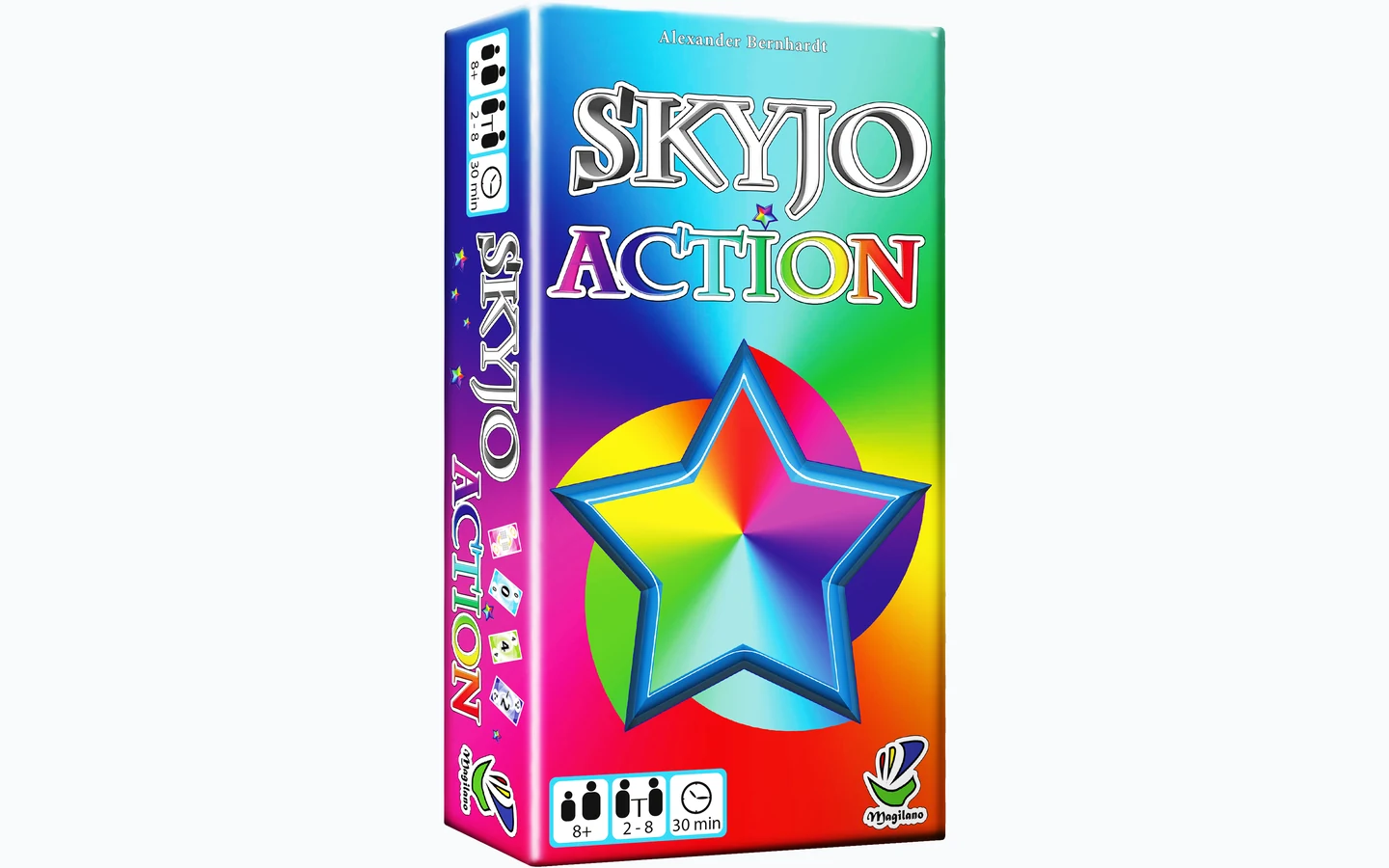
SKYJO Action Defense Card: Blocking Attacks, Extra Moves, and Timing Examples
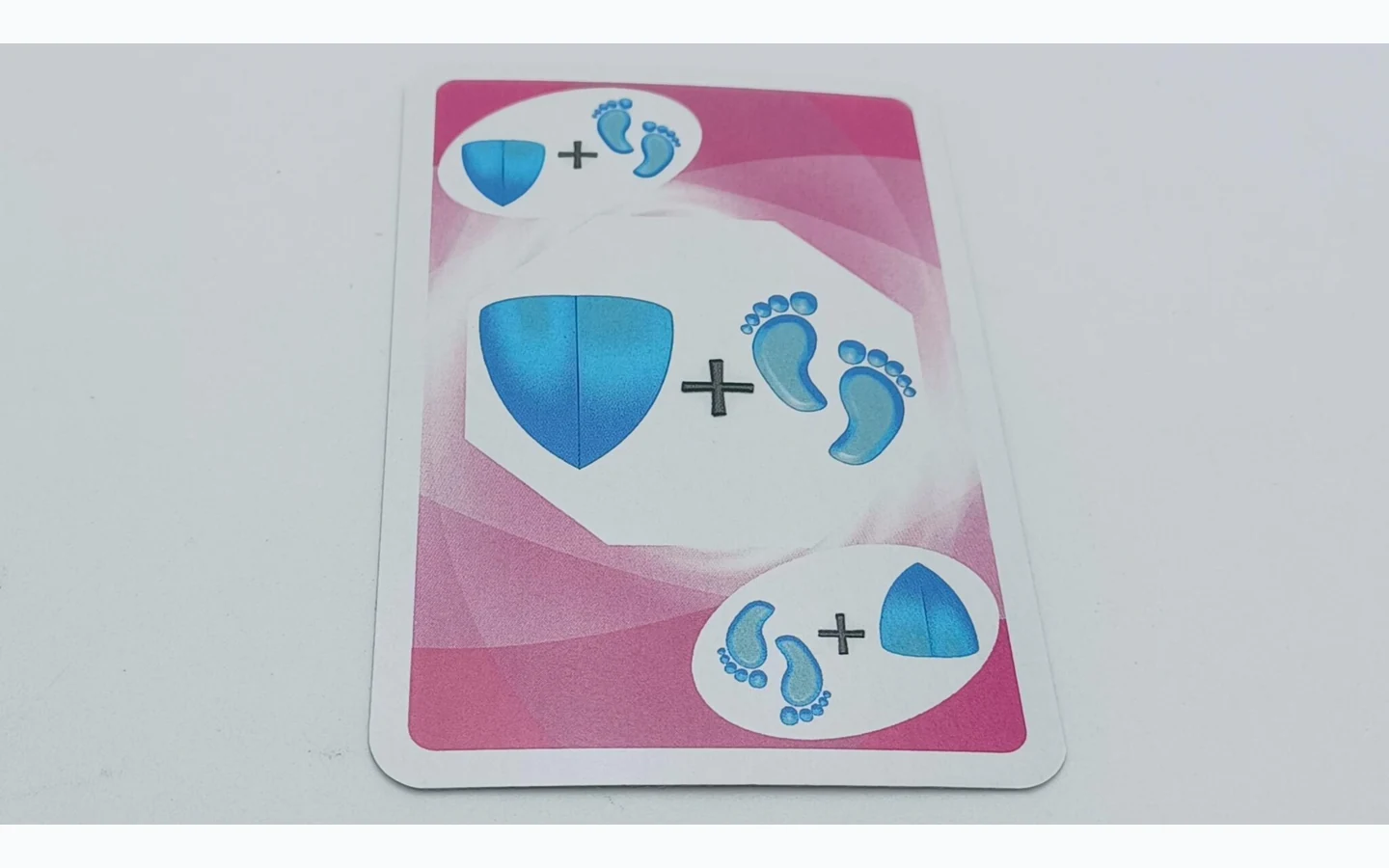
The shield can protect you from one attack or become an additional turn when you actively play it. Keeping those two uses separate makes its timing, cost, and value much easier to judge.
One card offers two uses, not two rewards at once
The SKYJO Action Defense card has two different jobs. While you keep it, it automatically protects you from one attack and is then discarded. On an eligible turn, you can instead actively play it, discard it, and receive an additional turn. Blocking an attack does not also award the defender an extra turn. That reward belongs to the active-play route, which immediately ends your protection.
The English publisher booklet spells the card “Defence + additional move.” Players searching for “Defense” are asking about that same shield card, not another edition or a second power. The important distinction is the event that sends it to the action discard pile. Did an incoming attack consume the protection, or did you choose to spend the card on your own turn?
| What happened? | Protection | Extra turn for you? |
|---|---|---|
| You keep Defense ready | Available against one attack | No |
| An attack triggers it automatically | Used up; Defense is discarded | No |
| You actively play Defense | Ends immediately; Defense is discarded | Yes, through the card's effect |
Thinking of it as permanent armor creates two mistakes. You may expect it to survive repeated attacks, or you may expect to keep shielding a valuable position after spending it for a move. It does neither. Once the card has gone to the action discard pile, that particular shield is finished.
This guide concerns the physical Action game, where action cards accompany the numbered and star cards. Classic SKYJO has no Defense card. For a full setup and the wider turn choices, use the SKYJO Action rules guide. Here the focus is the shield's timing: what triggers it, what using it costs, and why a card that seems protective can become a liability near the finish.
Resolve an attack before moving on
Check that the incoming card is an attack
The publisher labels three action types as attacks: Swap Cards With Another Player, Action Card Thief, and Meteor Shower. Start by identifying the actual card being used. Defense is protection against an attack, not a general veto over anything another player does that you dislike.
That distinction prevents a common overreach. Enlightenment can inspect hidden cards in a row or column, including another player's, but the booklet does not label it an attack card. You cannot expand Defense into a ban on all information gathering merely because the information concerns your layout. Similarly, another player using Double Move does not attack you simply because their extra opportunities are inconvenient.
Next identify who is affected. A simple one-attacker, one-defender situation is easier to teach than a complicated swap involving other players. Keep that first demonstration focused: name the attack, point to the already-held shield, and show where the shield goes. You can then discuss wider attack effects without inventing a different defensive rule for every opponent.
Discard the shield without taking an extra turn
Suppose Alex plays a swap aimed at taking a useful card from Bea. Bea already has Defense in her action area. The protection takes effect automatically, and her Defense goes to the action card discard pile. Bea has not actively chosen the shield as her own turn action, so she does not now draw a playing card, take an action card, or start an additional turn.
This is an event within the attack's resolution. It does not create a new turn for the protected player. Continue resolving the actual card and following the applicable turn order, rather than letting Bea insert a bonus action because the card also carries an additional-move symbol. Most importantly, remove the spent shield. Leaving it beside Bea's layout makes the next attack look protected when this copy has already been used.
The automatic wording also matters when deciding what to keep. It does not describe a secret reaction that you may reserve for the most expensive attack of the round. Once an incoming attack triggers this shield, its protection is consumed. That makes visible threats and the remaining number of ordinary turns useful information when you decide whether to retain Defense in the first place.
Playing Defense buys a replacement move
To understand active Defense, begin with Action's ordinary turn structure. You choose a playing-card draw, an action-card draw, or the play or discard of an action card. Those are alternatives. You do not normally draw a playing card and then freely use any number of action cards before handing play to the next person.
Playing an eligible Defense card is therefore your selected action. Its effect discards the shield and gives you an additional turn. You can use that turn for a legal choice such as drawing a playing card. Protection ends when Defense is played, so the next choice is made without that shield still protecting you.
Count the action you spent as well as the one you receive
Compare two routes from the same position, assuming the round is still open and you already hold a playable Defense:
- Keep it: choose a playing-card draw as your ordinary action. Resolve the draw, then finish the turn. You have made one attempt to improve your layout and still hold the shield.
- Spend it: choose to play Defense as your ordinary action. Discard it, take the additional turn it supplies, and use that turn for a playing-card draw. You have again made one attempt to improve your layout, but no longer hold the shield.
The second route is not two ordinary number-card draws for the price of one. One step in the sequence was playing Defense itself. Its attraction is that you can remove an unused action card's future scoring cost while preserving a useful move, rather than spending the entire opportunity on a discard that does nothing.
That last comparison is worth making explicit. The general action rules allow an action card to be discarded without performing its effect, ending the turn. Defense has a printed active effect that makes simply throwing it away less attractive: use its effect on an eligible turn and you also receive the additional turn. Of course, that benefit comes with the immediate loss of protection; it is not a way to keep the shield and clear its points simultaneously.
For a broader explanation of how action-generated moves connect, read the Reactivation and Double Move timing guide. For this card, the safest teaching habit is to narrate both steps aloud: “I am using my turn to play Defense; now I take the additional turn it gives me.” That simple ledger prevents an accidental extra draw and makes the real tradeoff visible to everyone.
Keep protection only while it protects something worth keeping
A shield is useful because of the position it protects, not because collecting shields is itself a route to a low score. Look at your layout, the actions opponents actually hold, and how soon the round might close. Those three pieces of information make a better decision than “Defense is always good” or “all action cards should be spent immediately.”
Compare a visible threat with a definite ten-point cost
Suppose your layout contains a valuable low card and an opponent has a swap attack available. Keeping Defense may deny that opponent an attractive target. A retained star arrangement can create a similar reason for caution: replacing one important card might damage more than its individual printed value. In that setting, insurance has an identifiable job.
Now change the situation. Your layout is still expensive, nobody is presenting a particular attack you need to stop, and your next move could improve a known problem. Keeping the shield merely because an attack might exist somewhere is weaker reasoning. If it survives unused to scoring, it adds ten points. Active use can remove that liability while preserving a move through its effect.
Keep the accounting conditional. A shield that actually blocks an attack is discarded and does not remain to add ten points later. A shield that deters an attack but stays beside you does remain a scoring liability. You cannot know in advance which history will occur, and the rules do not provide a universal probability for an opponent deciding to attack. Judge the real threat rather than inventing a precise expected saving.
Spend it before your last ordinary chance disappears
An opponent with one hidden card can change your timetable. If that player closes before your next ordinary turn, you cannot assume the final cleanup will let you unload an action card. Spending Defense on the current eligible turn may be your last clean opportunity to exchange protection for the extra move and remove its retained cost.
That does not make spending automatic. Discarding your shield exposes the very position you were protecting. If the next player can attack a valuable arrangement, your extra move should have a concrete purpose that justifies losing the protection. Name that purpose before acting: reducing a known high card, managing a dangerous ending position, or making another legal move that matters now.
The best habit is to compare two complete outcomes, not just two card labels. What remains vulnerable if you spend? What still scores if you keep? How many ordinary opportunities are realistically left? The broader Action strategy guide develops this connection between information, saved actions, and closing risk.
The end of the round changes both timing and arithmetic
In Action, a player can close the round by revealing their own last hidden card or another player's last hidden card. The other players receive the applicable final move, but this is no longer an unrestricted ordinary opportunity: the action rules bar playing or discarding action cards in the final phase. You cannot wait until that moment to cash in Defense for its additional turn, or throw it away without using its effect.
This is why “I still get one more turn” can be a dangerous plan. A final opportunity to improve a playing-card layout is not permission to do every action that was legal earlier. If your shield is still beside you when scoring arrives, count it with your retained actions. Do not quietly move it to the discard pile after seeing what the hidden cards reveal.
Each retained action contributes ten points. Start from a legal final playing-card score, after resolving the relevant matching lines and any applicable star scoring, then add the actions. Only after obtaining that round total should you assess the finisher condition. The person who caused the closing must be strictly lowest to avoid doubling a positive score; the rule does not double a zero or negative total.
A small layout can still produce an expensive finish
Your final playing-card score is four. One unused Defense adds ten, producing fourteen. If you caused the round to close and another player finishes with eight, your positive fourteen becomes twenty-eight. If you did not cause the closing, simply having a higher score does not apply that finisher penalty to you.
Negative cards do not automatically make the shield harmless either. A playing-card subtotal of minus seven plus the retained shield becomes positive three. If you caused the closing and another player's final total is two, your three doubles to six. By contrast, a final total that remains minus two is negative and is not doubled. It is the complete round total, not just the attractive numbers visible in your grid, that matters.
These cases explain why the shield's cost can reach beyond the ten printed points it adds. They do not prove that spending it earlier always saves a particular amount: an earlier move could change the whole position, and losing protection may allow an attack before closing. They show what you must count when comparing the routes. For full line and star examples, continue with the Action final-scoring guide. Defense stops an incoming attack; it does not block an unfavorable scoring rule.
Use a short table check when the shield causes a dispute
Most Defense disagreements become simpler when the table describes the event before moving cards. “I use my shield” is too vague: it can mean an automatic block during somebody else's attack or active play on your own turn. Those histories have different consequences even though the same card ends in the same discard pile.
- Name the card and the target. Is this one of the attack-labeled effects, and is the protected player actually involved?
- Name the route. Is an attack automatically consuming Defense, or is its owner selecting active Defense as an eligible turn action?
- Check the round stage. Has the closing condition already been triggered, barring action-card play and discard in the final phase?
- Track the physical card. A consumed or played shield goes to the action discard. A retained shield remains with its owner and must be counted if it survives to scoring.
For a first lesson, use a simple attack against one clearly protected opponent and a separate example of active use. Do not combine both demonstrations into one magical turn. Once everyone can state why only the active route grants another turn, the card becomes much easier to evaluate in an ordinary game.
Stop where the booklet stops
The English booklet allows a swap between two other players, but it does not walk through every possible multiplayer combination of targets and shields. Players have asked, for example, how to handle that exchange when only one of the two targets has Defense. The short wording should not be expanded into a confident universal rule about every participant's result or permission to choose new targets after a block.
For a disputed corner case, read your edition's wording together and look for a publisher clarification through the official Action rules. If your group chooses a convention where the text leaves the procedure unresolved, call it a house ruling and agree it before the next such play. Keep that convention separate from the clear basics: one automatic protection, or active discard for an additional turn.
Before your next ordinary turn, ask what the shield is doing for your current position and what it could cost if the round closes. Then announce your choice precisely. “Defense blocked the attack; I discard it” and “I play Defense, lose protection, and take its additional turn” are short statements, but they prevent very different games from emerging around the same card.

Loading comments...